How Innovative Uses of Telehealth Can Support Abortion Access

Telehealth has become an increasingly critical lifeline for health equity, including in the realm of reproductive health care, and specifically in abortion care. Telehealth enables clinicians to treat patients virtually without an in-person appointment. Patients can connect directly with a health care provider from any location using video or phone calls (often referred to as synchronous care), or via secure chat or messaging (asynchronous care). Telehealth can provide essential medical services directly to patients in their homes, between clinical sites, or through a hybrid of in-person and virtual care. These different modalities of telehealth can also serve important functions for abortion care.

A substantial body of research shows that telehealth can be used to safely and effectively deliver some services without the need for in-person clinical visits. In particular, research has shown that telehealth for medication abortion is just as safe and effective as in-person care. Telehealth can help make comprehensive reproductive health care more readily available, accessible and patient-centered, regardless of a person’s location or their local clinical infrastructure.

Since the COVID-19 pandemic, the use of telehealth has accelerated rapidly. As of 2022, roughly 39% of US adults reported using telehealth in the past year, with similar use rates across age, race, ethnicity and income. In 2024, some 71% of physicians reported using telehealth in their practice weekly—up from about 25% in 2018. This increase in the general prevalence of telehealth has been mirrored in the provision of abortion care, with the latest data showing that 29% of abortions are now provided via telehealth.

The expansion of telehealth abortion care has been shaped by shifts in federal and state policy. Since 2023, after an exhaustive review of the research on safety and efficacy, the Food and Drug Administration (FDA) has allowed telehealth, mail and pharmacy provision of mifepristone, one of two drugs used in the most common medication abortion regimen. In addition, eight states have passed shield laws that explicitly protect clinicians who provide telehealth abortion care to patients in states with total bans and other severe restrictions. However, anti-abortion activists have responded aggressively to the growing prevalence of telehealth for medication abortion and have challenged these evidence-based policies through legislation and in the federal courts. As a result, understanding the various models of telehealth abortion care is more important than ever. 

What Is Telehealth for Medication Abortion?

Medication abortion is a method of ending a pregnancy using pharmaceutical drugs. In the United States, this most commonly involves a two-drug regimen: mifepristone (an antiprogestin that blocks the hormone needed to sustain the pregnancy) followed by misoprostol (a prostaglandin that causes the uterus to contract and expel the pregnancy). Other drug regimens (such as misoprostol alone) can also be a safe and effective way to end a pregnancy. 

Telehealth for Medication Abortion (TMAB) generally refers to the use of phone and/or video calls for some or all of the interactions needed to prescribe and receive medication abortion pills. TMAB can be direct-to-patient, site-to-site, or accessed through a hybrid in-person/virtual care experience using different modalities. 

How Can Telehealth Be Used to Provide Medication Abortion?

Direct to patient:

  • The provider and patient are located in different places while using either a secure video-conferencing platform, audio platform, or an (asynchronous) messaging system. This is a fully remote model and often the patient is located outside of a clinical setting, such as in their home.
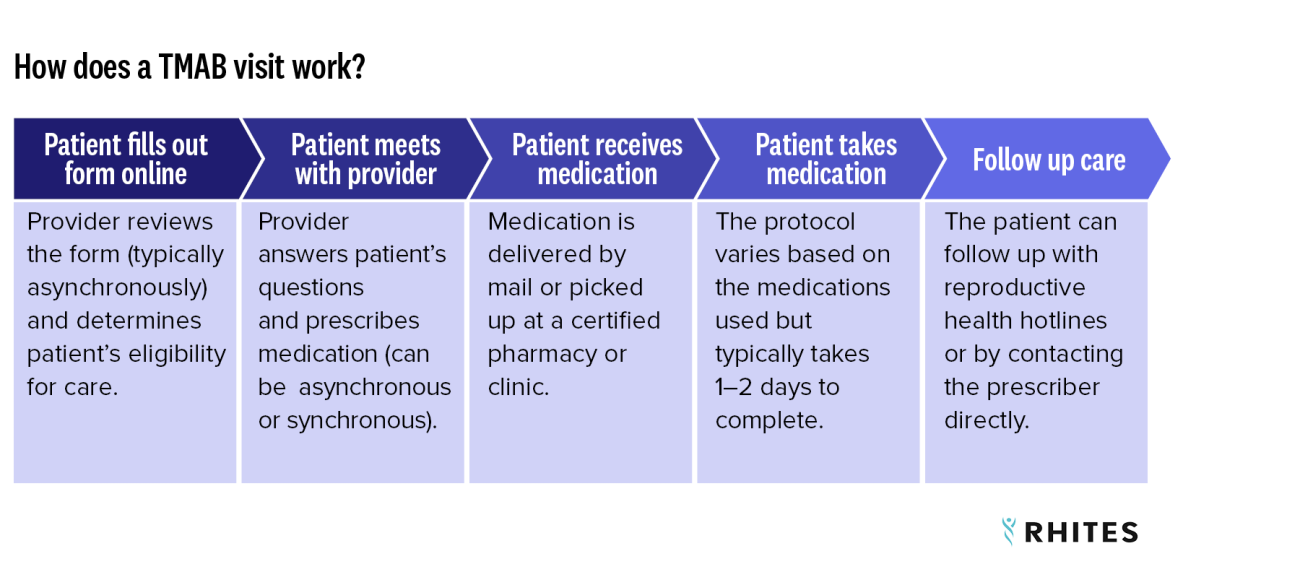
Example: Maya lives in rural Hawaii. She video calls her doctor in Honolulu from her bedroom. They talk through her pregnancy options, the doctor confirms her eligibility for medication abortion, and they complete the appointment entirely online. After the telehealth visit, the provider sends a prescription to a certified pharmacy or mails the abortion medications to Maya. If the former, Maya can pick up the medications at a pharmacy or the medications will arrive at Maya's location a few days later. She never has to leave her island.
How does a TMAB visit work?

Hybrid:

In this model, telehealth for medication abortion care is provided partly but not entirely by telehealth, often due to state policies requiring patients to have an in-person interaction with a clinician. This model of care was used extensively during the first years of the COVID-19 pandemic and could be vital to access if further restrictions are implemented.

Example: Jordan lives in a state that requires patients to have an in-person consultation before accessing abortion care. She has to drive to the clinic to meet her provider face-to-face before receiving pills in the clinic or at home, but can complete her follow-up appointment with a video call. 

Example: Alex meets with a telehealth provider, who determines they need an ultrasound prior to accessing medication abortion. The provider refers Alex to a brick-and-mortar clinic, which does all consenting and counseling via telehealth prior to the visit. Alex then goes to the clinic for the ultrasound and to pick up the pills from a clinician. 

Site to site:

The provider and patient are located in different clinical sites and use a secure video-conferencing platform for patient counseling, medication administration or supervised drug ingestion. 

Example: Priya lives in a small town with a local health clinic but no abortion provider. Her local clinic sets up a video call with a certified abortion provider at another clinic two hours away. The provider counsels her over video and then the local clinic staff, supervised remotely, give her a mifepristone pill.

Who Can Access Telehealth for Medication Abortion?

Just as telehealth in general has become a common mode of health care provision, telehealth for medication abortion has been increasingly adopted and preferred by many health care professionals and patients. As of December 2025, more than one in four clinician-provided abortions in the United States were accessed via direct-to-patient telehealth. As new legal restrictions have impacted abortion access throughout the country, telehealth for medication abortion has expanded to address unmet needs for care. A recent study of one online provider found that rates of telemedicine abortion provision were highest in Southern and Midwest, particularly in states with total abortion bans, and where care was provided under the protection of out-of-state shield laws. Additionally, the study found that rates of telehealth medication abortion were higher in counties that were further from brick-and-mortar clinics, as well as those with higher poverty rates. A different study examining one shield law provider’s patient demographics found that nearly two-thirds of their patients received subsidized care, due to financial hardships that would have made paying for care difficult or impossible.

Telehealth access to medication abortion can reduce the legal, financial and logistical barriers faced by many people seeking abortion care, and which can include state laws restricting or banning abortion provision; expenses associated with long-distance travel and accommodations; and the need to arrange childcare and time off work. However, structural barriers remain in accessing telehealth more broadly. These can include: a lack of broadband access or the lack of a private digital device (both of which can prevent patients from participating in virtual care consults); language barriers and other challenges navigating online platforms; lack of access to a personal credit card to pay for care; lack of a private mailbox to receive medication shipments; and financial barriers associated with out-of-pocket costs, underinsurance and lack of insurance coverage. These barriers are amplified in the context of general access barriers such as poverty, structural racism, and when the type of care sought is highly stigmatized, as is abortion care.

Who Regulates Telehealth for Medication Abortion?

The regulation of medication abortion care involves two overlapping systems of law, federal and state, that together determine what care is available, who can provide it, and how. 

Federal regulation of TMAB

At the federal level, the Food and Drug Administration (FDA) is the primary regulatory authority over drugs and medical devices. 

In 2000, the FDA specifically approved mifepristone for use in medication abortion. Other medications commonly used in abortion care, including misoprostol, are FDA-approved for other indications and widely prescribed off-label for abortion, a practice that is both legal and common across medicine. 

The FDA has established Risk Evaluation and Mitigation Strategies (REMS) for some of the medications it approves, including mifepristone, which involves specific prescribing and dispensing requirements. Outside of their application to mifepristone, REMS are largely applied only to drugs with specific safety risks and are applied to fewer than 3% of FDA approved drugs. In recent years, anti-abortion actors have sued in federal court to reimpose an older set of REMS for mifepristone, which required that it be dispensed “only in clinics, medical offices and hospitals by or under the supervision of a certified prescriber”—stipulations which may limit telehealth provision of the drug. At present, all models of telehealth provision are permitted, as this case awaits full consideration by the Fifth Circuit Court of Appeals, and the FDA has begun a safety review of the medication. Depending on the ultimate outcome of the case and the review, different models of telehealth abortion care, including hybrid models, may still be available to bridge some gaps in access.

Beyond drug approval, federal law also shapes the broader health care environment: the Health Insurance Portability and Accountability Act (HIPAA) protects the privacy of patients' medical records and limits what information providers can share, and the Federal Trade Commission Act (FTCA) prohibits unfair or deceptive practices in health care markets, including misleading advertising about medical services. These federal frameworks set baseline standards that apply in every state regardless of local policies or regulations (such as those imposed by licensing boards). 

State regulation of TMAB

States, however, retain broad constitutional authority to regulate the practice of medicine and the delivery of health care within their borders. This means states can and do impose their own additional requirements on top of federal law, governing everything from who can prescribe medication, to what telehealth visits are legally valid, and to whether a clinic must have a physical location to operate legally. 

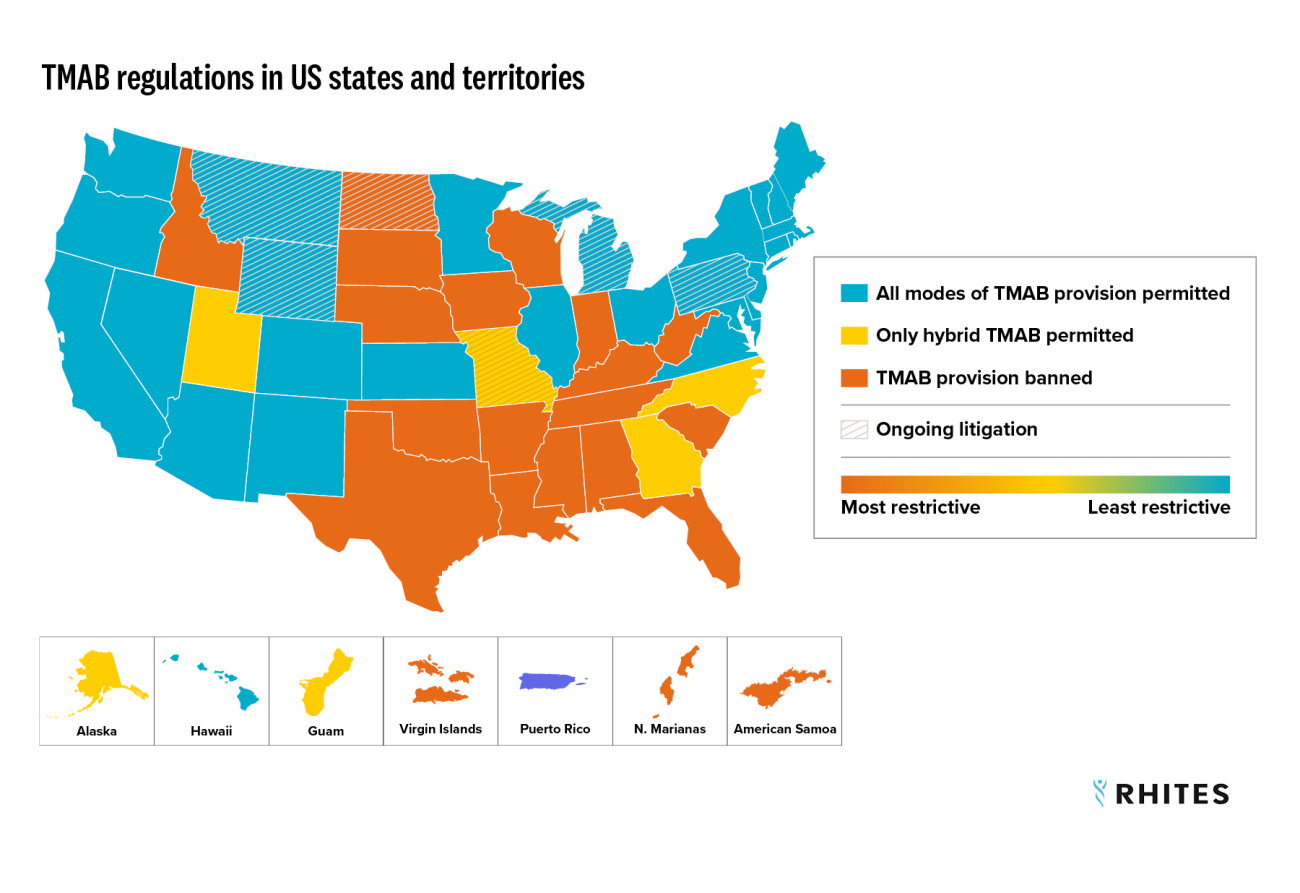
Currently, 26 states and Washington, DC allow all modes of TMAB provision, while six states allow only hybrid TMAB. In 18 states, TMAB provision is completely banned.

United States Map of TMAB regulations in US states and territories

Examples of state laws and regulations impacting TMAB: 

  • Limitations on telehealth modalities: These legal and regulatory barriers restrict the ways that patients can access clinical care via telehealth (e.g., in some states, direct-to-patient telehealth abortion care is not permitted). They are often driven by political considerations, rather than clinical practice, reducing providers’ flexibility and patients’ access to care.
  • Limitations on provider scope of practice: These legal and regulatory barriers restrict medical professionals’ service provision under their license, (e.g., in some states only physicians are allowed to prescribe mifepristone). Like telehealth restrictions, they are often imposed based on policy preferences rather than evidence from clinical practice.
  • In-person visitation requirements: These are state policies mandating that abortion patients be physically present with their clinician during certain stages of the abortion care process, regardless of the health care provider’s medical judgment. For example, a state may require the medication to be dispensed in person or require in-person counseling prior to all abortion care.

The impact of shield laws on TMAB across state lines

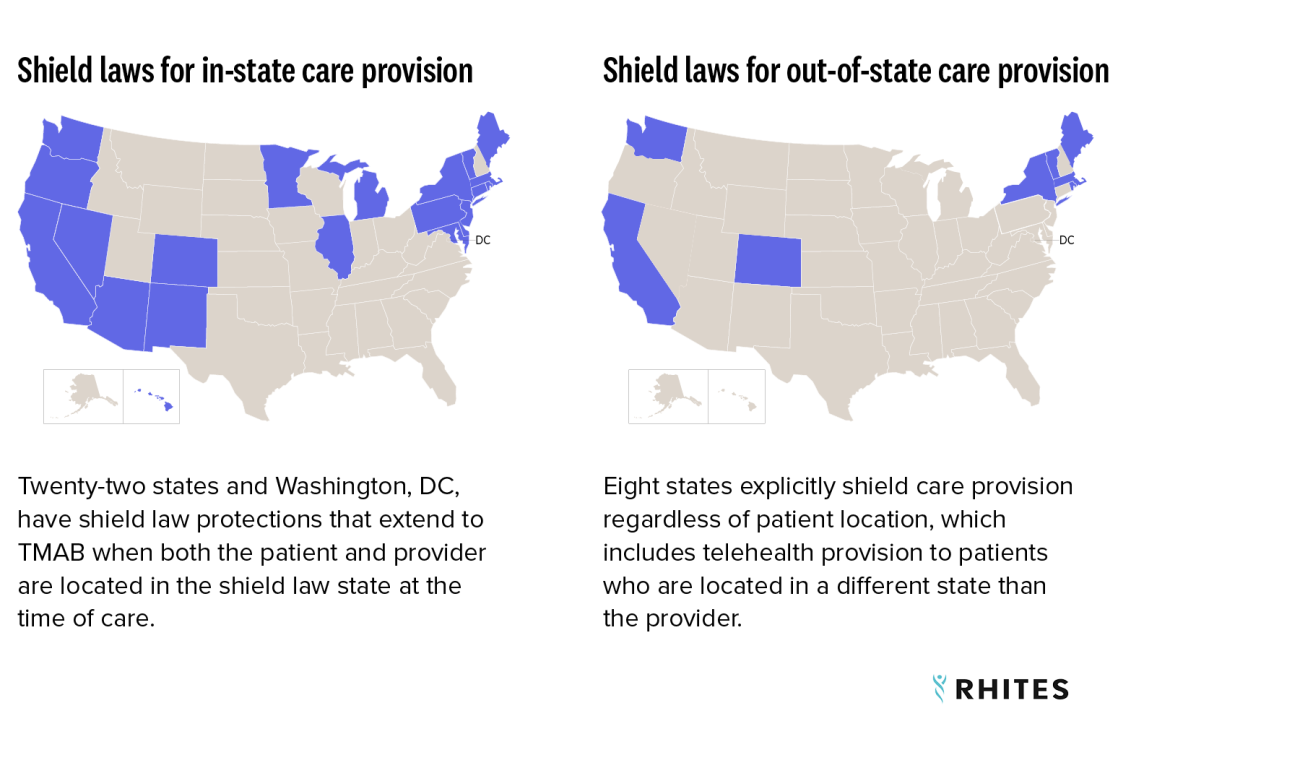
A shield law is a state-based legal protection that may be established by legislation or by executive order. These laws are typically designed to protect abortion and TMAB providers, practical support organizations, abortion funds and others from out-of-state criminal and civil investigations and associated professional and financial consequences.

United States maps of shield laws for in-state care provision and shield laws for out-of-state care provision

Eight of the 22 states with shield laws extend their protections to telehealth regardless of the patient’s location. This means that these eight states protect providers who offer care to residents of states with abortion bans or restrictions—with the providers prescribing and mailing abortion medication following a telehealth consultation. 

The result of these state policies is a patchwork: the same federal rules apply everywhere, but access to medication abortion via telehealth, and the type of telehealth available (e.g., asynchronous, synchronous or audio-only) varies dramatically depending on where a patient lives.

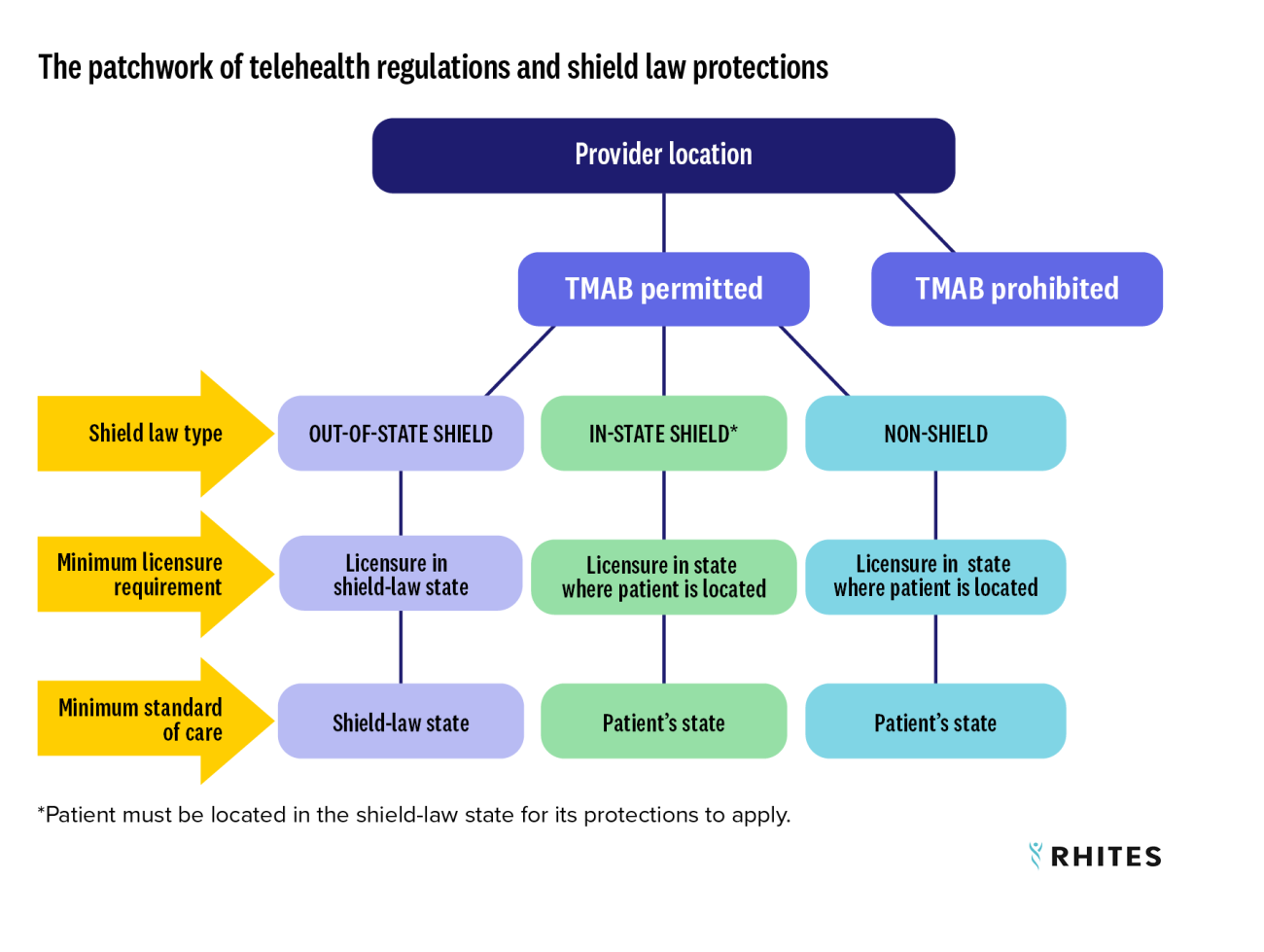
The various state laws and regulations on telehealth for medication abortion, along with state shield laws, all factor into the complicated web that providers must navigate to determine how and where they can provide medication abortion care through telehealth. Providers must consider whether the state in which they are located permits TMAB, if their state has a shield law and the scope of that shield law (i.e., whether the protections extend to telehealth across state lines or are limited to in-state care only), as well as licensure requirements and minimum standards of care.

The patchwork of telehealth regulations and shield law protections

Conclusion

Telehealth is available in multiple ways to provide and support access to abortion care, whether through direct-to-patient, hybrid, or site-to-site models, or to support pre- and post-abortion care. Nevertheless, the patchwork of state telehealth regulations and structural barriers can make trying to access medication abortion a challenging experience, particularly for patients who are already marginalized by the health care system or live in underserved health care deserts. In this context, utilizing a range of telehealth models or alternate medication abortion regimens may facilitate access to care or help providers pivot to continue care should federal or state law change. Even in environments of confusion and care restrictions, it remains vital to ensure that people with the capacity for pregnancy have accurate information and access to the broadest possible range of sexual and reproductive health care options.

Acknowledgments

Dana Northcraft, Natalie Birnbaum and Kimya Forouzan. Dana Northcraft is the founding director of RHITES (Reproductive Health Initiative for Telehealth Equity & Solutions) and Natalie Birnbaum is the organization's state and legal policy director. This fact sheet was edited by Ian Lague.

Source URL: https://www.guttmacher.org/fact-sheet/how-innovative-uses-telehealth-can-support-abortion-access