State Policy Trends 2025 Full-Year Analysis

New restrictions and criminalization target remaining avenues of care
Kimya Forouzan, Guttmacher Institute

In 2025, state policies on sexual and reproductive health and rights (SRHR) shifted away from the prevailing trends of recent years. In 2023 and 2024, the first two years after the Dobbs v. Jackson Women’s Health Organization decision, restrictive state policies focused largely on limiting access to abortion through bans on care provision. While 2025 saw some states reaffirming abortion bans, pausing and resuming care provision, and redefining exceptions to abortion bans, much of the past year’s legislative activity moved beyond the prior pattern.

In particular, the focus of anti-SRHR policymakers shifted to cutting off the ways that people in states with total and gestational bans are still accessing care in spite of these restrictions. For example, the anti-SRHR movement has increased attacks specific to medication abortion access, telehealth provision under state shield laws, and the remaining avenues through which young people can access SRH information and care. They have also targeted the abortion funds, community networks and individuals who help patients access care, while ramping up funding for anti-abortion centers and “alternatives to abortion” programs.

These legislative shifts have also demonstrated a further push toward criminalization of SRH patients and providers. While such criminalization is not a new phenomenon, there has been a marked trend toward leveraging criminal penalties in anti-SRHR efforts to restrict access to care. At the same time, protective states have taken proactive steps both to push back against criminalization and to bolster protections for other forms of sexual and reproductive health care, such as contraception and fertility treatments.

While not covered in this analysis, federal changes to SRHR policy loom over these shifts in state policy. National and federal developments such as the relentless attacks on medication abortion using mifepristone, the “defunding” of Planned Parenthood and severe cuts to the Medicaid program are also reshaping care and access at the state level.

These escalating attacks on SRHR have only widened the gap between protective and restrictive states—putting them at odds with each other as protective states attempt to mitigate the harms of abortion bans and preserve access to care through shield laws and other strategies.

Counts of State Legislation in 2025 (as of December 5, 2025) 

Sexual and reproductive health and rights overall 

2,058 provisions introduced that would protect sexual and reproductive rights or expand access to sexual and reproductive health care (238 provisions enacted, 22 provisions vetoed) 

841 provisions introduced that would curtail sexual and reproductive rights or restrict access to sexual and reproductive health care (70 provisions enacted, 3 provisions vetoed) 

Abortion 

622 provisions introduced that would protect or expand access to abortion care (49 provisions enacted, 1 provision vetoed) 

498 provisions introduced that would restrict access to abortion care (36 provisions enacted, 0 provisions vetoed) 

45 provisions introduced that would add or expand existing exceptions to abortion bans (2 provisions enacted, 0 provisions vetoed) 

Contraception 

300 provisions introduced that would protect or expand access to contraceptive services (42 provisions enacted, 8 provisions vetoed) 

5 provisions introduced that would restrict access to contraceptive services (2 provisions enacted, 0 provisions vetoed) 

Gender-affirming care 

55 provisions introduced that would protect or expand access to gender-affirming care for young people (7 provisions enacted, 1 provision vetoed)  

38 provisions introduced that would ban gender-affirming care for young people (5 provisions enacted, 0 provisions vetoed)


Shifts in access to abortion care 

In 2025, there were significant shifts in abortion access in two states, Wyoming and Missouri. In both of these states, restrictions completely shut off access or significantly limited access to abortion care at various points throughout the year, going beyond state bans based on gestational duration. Currently, 13 states have total abortion bans in place—including North Dakota, which reinstated its total ban in late 2025—and an additional 28 states have bans based on gestational duration that fall somewhere between six weeks and viability. 

In Wyoming, the legislature passed two bills targeting the state’s only remaining procedural abortion clinic, Wellspring Health Access. The first restriction was a TRAP (Targeted Regulation of Abortion Providers) law, which required abortion clinics providing procedural care to meet the same standards as ambulatory surgical centers and for abortion providers offering procedural care to have admitting privileges at a hospital within 10 miles of their clinics. The second restriction required patients to get an ultrasound 48 hours prior to initiating a medication abortion. 

The enactment of these laws resulted in Wellspring Health Access pausing care provision, meaning that procedural abortion was unavailable throughout Wyoming. However, on April 21, Judge Thomas Campbell of the Natrona County District Court issued a preliminary injunction and temporary restraining order on both abortion restrictions. As a result, Wellspring was able to resume care provision while the litigation proceeds.

“Abortion bans have never been about protecting life—they’ve always been, and continue to be, about politics and stripping away people’s right to bodily autonomy and a woman’s right to make deeply personal medical decisions. In Wyoming and across the country, these bans are dangerous and threaten the little access that continues to exist in the Mountain West while putting lives at risk—especially for those already marginalized by distance, poverty or circumstance. We must trust patients and providers, not politicians, to safeguard dignity, autonomy and the fundamental right to health care for everyone no matter where they live.

Julie Burkhart, Founder and President, Wellspring Health Access

Similarly, in 2025 Missouri residents experienced both pauses and resumptions of clinical abortion care due to a series of legal reversals. In November 2024, Missouri residents voted to amend their state’s constitution to protect abortion rights. Following the constitutional amendment, advocates filed a lawsuit to remove existing restrictions on abortion care in the state, including the state’s total abortion ban.

In December 2024, the state’s total ban and several other restrictions on abortion care were enjoined as litigation continued, and additional restrictions were enjoined in February 2025, eventually allowing some care provision to resume in the state. However, on May 28, the Missouri Supreme Court ruled that an incorrect legal test was applied when issuing the injunctions and ordered that the total ban and restrictions be reinstated. Eventually, the ban and accompanying restrictions were again enjoined in July.

Beyond this complicated legal back and forth, providers in Missouri are also engaged in a legal battle over the requirement that clinics have a “medication abortion complication plan” approved by the state’s Department of Health. This bureaucratic barrier, premised on misinformation about the safety of medication abortion, has further limited the availability of medication abortion care in the state.

In addition to Wyoming and Missouri, North Dakota also experienced a shift in the legal status of abortion care. In November, the North Dakota Supreme Court reinstated the state’s total abortion ban, reversing a lower court decision. Unlike the legal decisions in Wyoming and Missouri, however, this shift did not immediately change the landscape of abortion access in North Dakota, as there has not been an abortion provider operating there since 2022 and the state requires in-person visits for medication abortion. However, the reinstated abortion ban will prevent any new clinics from opening and will have a profound impact on North Dakotans’ future access to procedural and medication abortion.

Abortion ban exceptions

In 2025, legislators in 12 states introduced 45 bills to add exceptions to existing abortion bans, and two were enacted. Typically, exceptions to abortion bans purport to allow access to abortion care in circumstances involving risk to the life or health of the pregnant person or when the pregnancy is the result of sexual violence. However, these exceptions are inaccessible to many pregnant people and often involve onerous documentation and other requirements before abortion care can be provided. Although these narrow exceptions may allow some people to access the care that they need, efforts to access them often still result in denials of care.

While many of these exception bills are intended to mitigate the harm caused by abortion bans, their passage does not ensure greater access to care and, at times, can cause additional harm. For example, a law enacted in Kentucky redefined exceptions to the state’s abortion ban with a list of specific medical situations in which a physician can provide care, rather than leaving such designations up to the physician’s clinical judgment, as had previously been the case. In doing so, the bill’s authors also removed mention of “abortion” in the section related to medical exceptions, both furthering abortion stigma and creating confusion about when abortion care is medically necessary.

In August, Texas enacted Senate Bill 31/House Bill 44, which purported to clarify exceptions to the state’s ban on abortion care. However, the new law was designed to revive the state’s 100-year-old abortion ban, which imposes criminal penalties not just on abortion providers but also on those who support abortion patients and (potentially) on patients themselves. Attorney General Ken Paxton had previously signaled his intention to use the more than 100-year-old law to prosecute abortion providers post-Dobbs. While the state legislature amended the bill before it was enacted—to insist that it not be construed to “affirm or reject the validity” of the 100-year-old ban—this language has done little to assure abortion providers, supporters and patients that they will be safe from liability.

Funding for anti-abortion centers and “alternatives to abortion” programs

In 2025, states continued their funding of anti-abortion centers, one means by which anti-abortion policymakers seek to reduce access to the remaining avenues of care. Anti-abortion centers (also called “crisis pregnancy centers”) aim to prevent pregnant people from obtaining abortion care and contraception by providing misleading and stigmatizing information about these services and about human development. Although they are usually not licensed medical facilities, these centers often pose as abortion clinics and target people with few financial resources by providing free but very limited services such as pregnancy tests and ultrasounds. Similarly, “alternatives to abortion” programs are state-run initiatives that offer (often inaccurate) information and time-limited services to pregnant people with the specified goal of dissuading them from seeking abortion care. Frequently, both anti-abortion centers and “alternatives to abortion” programs are designed to delay individuals’ receiving care, with the goal of pushing their pregnancies past gestational duration limits and rendering abortion care inaccessible. They also often collect extensive personal information about patients despite having few obligations to honor patient privacy laws, as they are typically not legitimate or certified health care providers.

In 2025, legislators in 16 states introduced 29 bills to grant or extend funding for anti-abortion centers, and 10 were enacted (Alabama, Florida, Louisiana, Missouri, Ohio, South Carolina, Texas, Utah and West Virginia). Of those, 6 states allocated amounts in the millions to anti-abortion centers or “alternatives to abortion” programs, including in Texas ($90 million to the “alternatives to abortion” program), Florida ($29.5 million to the “alternatives to abortion” program), and South Carolina ($2.4 million to anti-abortion centers). Additionally, Missouri allocated $12.4 million to the “alternatives to abortion” program, with $10 million of that coming from federal funding for Temporary Assistance for Needy Families (TANF).

 

Medication abortion

As the 2025 state legislative sessions progressed, one clear trend was the introduction of bills that target the provision of medication abortion across state lines and the shield laws that protect such provision from out-of-state prosecutions. By doing so, anti-abortion legislators sought to restrict access to one of the remaining avenues of care for residents of states with abortion bans.

As Guttmacher data demonstrate, the prevalence of medication abortion provision has increased since 2020, with medication abortion accounting for 63% of all clinician-provided abortions in states without total bans in 2023. Importantly, many residents of states with abortion bans or severe abortion restrictions have been able to access high-quality care through shield law providers, who prescribe and mail them abortion medication following a telehealth consultation. Access to medication abortion has been a lifeline for many patients post-Dobbs, and anti-SRHR legislators and advocates have set their sights on limiting that remaining point of access.

In 2025, legislators in nine states introduced 23 bills that sought to criminalize the sale, purchase or distribution of medication abortion pills, and one law was enacted. The newly enacted law, Texas’s HB 7, allows anti-abortion lawsuits by private citizens, further increasing the threat of liability for providers and distributors of medication abortion pills.

“HB 7 targets anyone who helps Texans access medication abortion care and attempts to spread Texas’s abortion ban beyond state lines. This legislation is designed to scare, punish and isolate people who are pregnant and those who support them, creating a chilling effect on abortion care and support nationwide. At Jane’s Due Process, we see the fallout of laws like HB 7 every day, as young Texans flood our phone lines with requests for support and questions about their rights. We also know that bills like this serve as a test case for anti-abortion lawmakers in other states, eager to make this essential health care even more costly and dangerous to access."

—Lucie Arvallo, Executive Director, Jane’s Due Process

Additionally, states attacked access to medication abortion through other mechanisms, such as reclassifying the abortion medications mifepristone and misoprostol as controlled substances. Fifteen of these controlled substance bills were introduced in eight states, although none were enacted. Seven states also introduced nine bills that would require wastewater to be tested for traces of these medications or would hold manufacturers liable if these medications are found in wastewater, an unscientific effort designed to generate fear and misinformation regarding medication abortion and its well-established safety record. None of these bills were enacted.

Shield laws and other protections

These attacks on medication abortion went hand-in-hand with efforts to curtail or eliminate shield law provision of abortion care, often through bills originating in states that already have total abortion bans or other significant restrictions. Such bills frequently attach criminal or civil penalties to the provision of medication abortion, and often target out-of-state providers who are offering care under shield law telehealth protections. For example, Louisiana enacted a law this year that establishes a private right to sue such shield law providers, whom the law labels “abortion drug dealers.” Additionally, Texas introduced a bill that would have required internet providers in the state to make reasonable efforts to block websites through which people can connect with shield law providers. The bill would have also added liability for hosting a website that provides information about how to obtain medication abortion.

As these developments demonstrate, anti-abortion lawmakers are seeking to both eliminate the remaining points of abortion access that have persisted post-Dobbs and use criminal and civil liability as a tool to threaten abortion providers and patients. Despite these attacks, states that are relatively protective of abortion care have attempted to expand access, to ensure that both their own residents and those of other states can get the care they seek. This includes bolstering shield law protections both for telehealth providers and for those who facilitate or provide abortion care for pregnant people traveling from out-of-state. These improvements to existing shield laws serve not only to protect providers, abortion funds, and practical support networks, but also to safeguard sensitive information that may be requested via legal processes about out-of-state patients. (As Guttmacher data demonstrate, 74,490 people travelled to states without total bans to obtain abortion care in the first six months of 2025.)

In 2025, legislators in 16 states introduced 39 bills to improve shield law protections for abortion providers and patients, and 8 were enacted (in California, Colorado, the District of Columbia, Delaware, Massachusetts, North Carolina, Vermont and Washington). For example, Vermont expanded shield law protections to provide interstate reciprocity for shield law providers, meaning that the protections that Vermont offers to its shield law providers extend to such providers from other states. Other states, such as Washington and Colorado, added stronger enforcement mechanisms to their shield laws. In Washington, the new law requires increased notification about noncooperation with out-of-state warrants, subpoenas or court orders related to protected health care services, including abortion and gender-affirming care. In Colorado, a new law includes increased notification requirements such as an affirmation under penalty of perjury that a subpoena is not related to legally protected health care activity, including abortion.

Other jurisdictions, such as Illinois and the District of Columbia, expanded their protections to include a broader range of clinicians and to protect providers from adverse insurance consequences for offering protected care. Additionally, California enacted legislation that protects research records and personal identifying information from subpoenas and other out-of-state legal actions, as well as a law that protects attorneys working in reproductive rights.

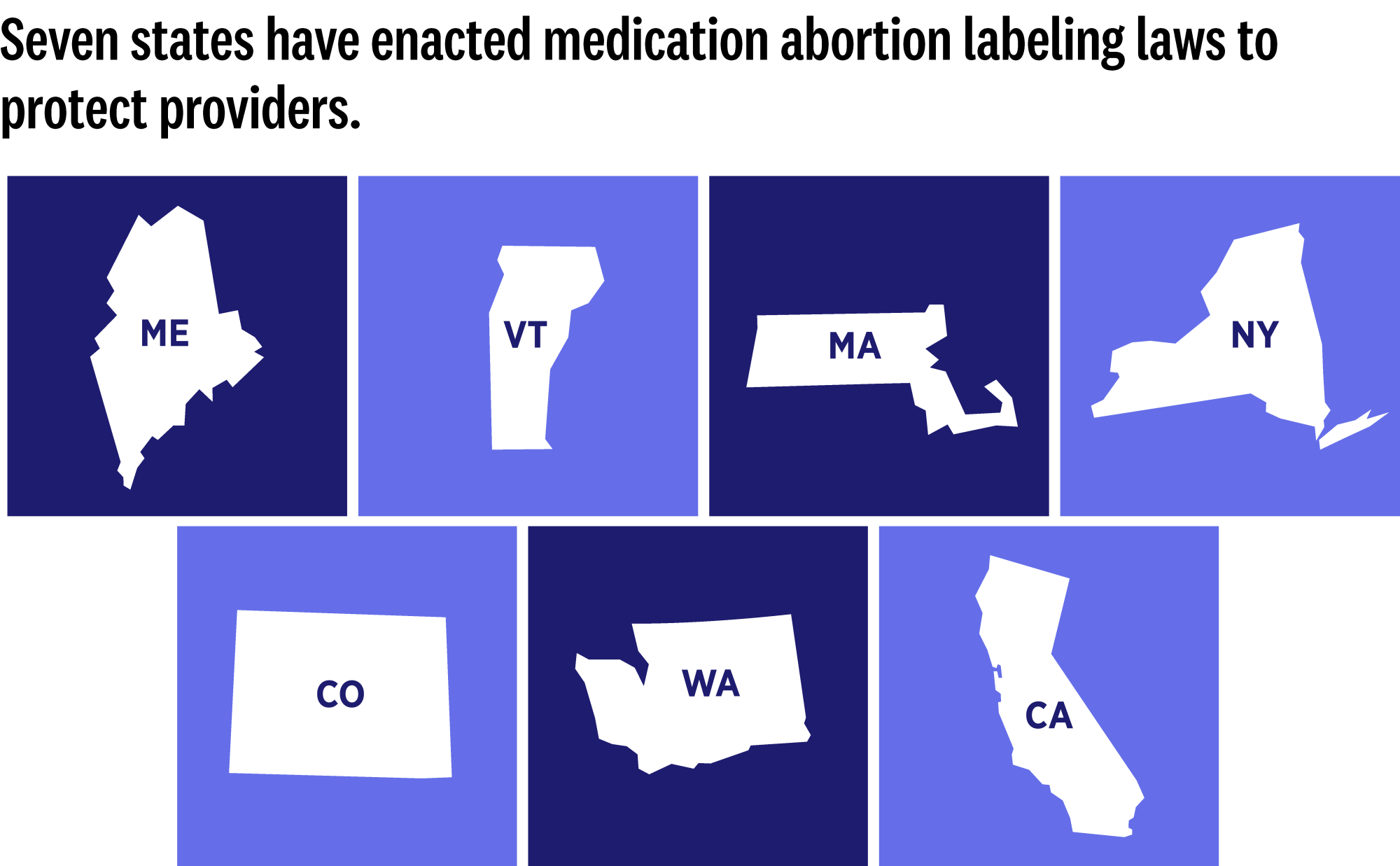
Additionally, seven states introduced 10 bills that would allow clinicians to list their facility names (rather than their own names) on the label for medication abortion prescriptions or for pharmacists to dispense medication abortion prescriptions without a provider's name listed. This step can mitigate risk for telehealth shield law providers caring for out-of-state patients. Six states enacted these bills in 2025 (California, Colorado, Maine, Massachusetts, New York and Vermont), and Washington enacted a similar law in 2024.


Protective states also took additional steps to ensure the availability of mifepristone. Three states introduced four bills that would protect the state’s supply of mifepristone, even if the Food and Drug Administration were to revoke approval of the drug. Two of these bills were enacted (California, Illinois).


In 2025, restrictive state legislatures also demonstrated a persistent focus on bills that would criminalize patients, providers and abortion support networks. The surveillance and criminalization of patients for reproductive health and pregnancy outcomes is not a new phenomenon. However, both the incidence of pregnancy criminalization and the number of bills that provide legal grounds for such criminalization have increased.

Pregnancy criminalization is often deeply intertwined with ideological concepts of embryonic or fetal personhood and laws that introduce such concepts into the state code. Such laws explicitly or implicitly grant an embryo or fetus the full legal rights of a person, and, in doing so, frequently place the rights of the embryo or fetus ahead of the rights of the pregnant person. Often, these bills seek to implicate pregnancy outcomes such as abortion, miscarriage and stillbirth under unrelated criminal and civil laws, such as child abuse, homicide, feticide, fetal death, wrongful death and drug-related crimes. In 2025, at least 37 bills were introduced in 19 states that include embryonic or fetal personhood language. None of those bills were enacted.

Seven of these bills explicitly include language that could be used to criminally charge people for their own pregnancy outcomes, though none of those bills were enacted. For example, a bill introduced in Iowa this year sought to explicitly grant legal rights to embryos and fetuses, as well as attach liability under the existing “wrongful death” statute. Additionally, a legislator in Montana introduced a bill creating the crime of “abortion trafficking,” that could be used to prosecute anyone who helps a pregnant person travel for care. The bill would have extended this criminal liability to the pregnant person themselves, should they travel for abortion care, based on the notion that the fetus is being “trafficked.” Another bill, South Carolina Senate Bill 323, would have assigned criminal penalties to wide array of actions related to providing and receiving abortion care, and tied these penalties to parts of the state code that govern homicide prosecutions. In doing so, S 323 equated abortion with homicide and placed the legal rights of fetuses above the legal rights of the pregnant person. Under these provisions both patients and providers could have faced felony charges, as well as up to 30 years in prison, for their involvement in abortion care.

Despite these extreme instances of criminalization of reproductive health care and pregnancy outcomes, advocates in some states have been successful in pushing back against the growing shadow of criminalization. Currently, the majority of instances of criminalization arise from substance use during pregnancy, including a significant number of cases that arise from the use of legal substances. In 2025, legislators in 16 states introduced 30 bills that would provide services to pregnant individuals engaging in substance use, rather than criminalizing them. Seven states enacted these bills (Delaware, Florida, Iowa, Texas, Vermont, Virginia and Washington).

Additionally, protective states continue to advance data privacy bills designed to safeguard information that could be used in the criminalization of pregnancy outcomes. In 2025, legislators in 24 states introduced 50 bills that would strengthen data privacy protections related to reproductive and sexual health, and 4 of these bills were enacted in 3 states (California, Massachusetts, Virginia). Although instances of criminalization most commonly arise from reports made by individuals (including health care providers), digital surveillance has also been used by law enforcement in the context of reproductive health care. The potential for abuse of certain technologies, such as digital IDs, underscores the importance of new measures to protect data privacy.

“South Carolina has become a testing ground for extreme attacks on bodily autonomy, with proposals like S 323 that seek to criminalize pregnancy outcomes and impose personhood on embryos. These policies endanger women, families and providers, creating fear and confusion in health care. At WREN, we see firsthand how criminalization disproportionately harms people already facing barriers to care. We need laws that protect health and dignity, not ones that threaten people with surveillance and punishment for their private reproductive decisions.”

—Amalia Luxardo, Chief Executive Officer, Women’s Rights & Empowerment Network


In addition to new forms of criminal and civil liability targeting providers and patients (as discussed in the sections above), the 2025 state legislative sessions also featured several bills designed to punish abortion funds, practical support networks and individuals who may be helping someone obtain abortion care, either in-state or across state lines.

In the past year, eight states introduced 12 bills with criminal or civil penalties that could be assigned to abortion funds, practical support networks or helpers. One of these bills was enacted (in Louisiana).

For example, South Carolina S 323 would make it illegal to “receive proceeds” from abortion care, which could be used to criminally charge people who manage or are employed by abortion clinics. The bill would also criminalize the sale, distribution or even advertisement of medication abortion.

Other state bills, like the Texas HB 66 (mentioned in the “Medication Abortion and Shield Laws” section above), seek to impose criminal liability simply for hosting a website that provides information about medication abortion.

Additionally, states have increasingly been considering “abortion support bans,” which create criminal or civil penalties for those who help minors travel across state lines for abortion care. (These support bans are detailed in the “Youth Access” section below.) 

“Illinois continues to care for the highest numbers of people forced to travel of out-of-state for their abortion care for by far. This responsibility is not an accident. Our statewide capacity has been made possible by a constellation of providers, advocates and public officials. We have expanded our provider pool, invested in clinic and patient navigation infrastructure, and are home to the largest independent abortion fund in the country. Illinois continues to show up for people who need abortions whether they are from Chicago, Indianapolis, Memphis or Miami. This August, Governor Pritzker signed a bill broadening our shield law protections, ensuring that all health care providers are protected when providing reproductive health services.

The Chicago Abortion Fund is proud to live in a state where abortion is treated as what it is: health care. Illinois continues to meet the moment by implementing policies that not only protect abortion access, but expand it. We hear time and time again that the protections we have built in our state have allowed the people we support to feel safe, to feel human, to feel a sense of comfort as we support them through extreme barriers to basic health care.”

—Megan Jeyifo, Executive Director, Chicago Abortion Fund


Another priority in the 2025 state legislative session was access to contraception. Although there were not significant numbers of state bills that would limit or ban contraception in 2025, the attacks on access continue to grow. In the last three years, the focus of the anti-abortion movement has expanded to encompass all types of reproductive health care, not just abortion. In particular, the Supreme Court’s decision in Medina v. Planned Parenthood of South Atlantic this year has had ripple effects on both access to and coverage of contraceptive services for Medicaid recipients.

Additionally, in recent years, some state bills have employed new definitions of contraception designed to create confusion and to begin laying the groundwork for new restrictions. For example, South Carolina Senate Bill 323, mentioned above, would have amended the definition of “contraceptive” so that it no longer references preventing “implantation of a fertilized ovum in a woman’s uterine wall after conception,” nor the prevention of ovulation. By removing reference to these mechanisms of action, the bill may generate confusion as to which methods of contraception are permitted under the state’s abortion ban. Although these changes would not immediately restrict access to emergency contraception (which works, in part, by delaying ovulation) or other forms of contraception, the confusion could lay the groundwork for future attacks on contraception and mirrors attempts from other states in past years.

Despite these alarming developments, the 2025 sessions also saw jurisdictions protective of SRHR taking legislative steps to protect contraception access with a new sense of urgency. Legislators in 40 states, DC and Guam introduced 182 bills that would improve access to contraception, with 16 of these bills being enacted across 12 jurisdictions (California, Connecticut, District of Columbia, Guam, Illinois, Maine, Michigan, Nevada, Oklahoma, Rhode Island, Tennessee and Virginia). These bills, designed to safeguard access to contraception in light of growing threats, represent an important inflection point in state legislation after Dobbs.

State efforts to expand access to contraception included making contraceptive services available at pharmacies, campus health centers, and emergency departments. Ten states introduced 20 bills that would expand access to contraception through pharmacists (four enacted in Michigan and Rhode Island), and six states and Guam introduced 11 bills expanding access to emergency contraception on college campuses and in emergency rooms (two enacted in Guam and Illinois).

Additionally, some states took steps to improve insurance coverage of contraceptives. Legislators in 24 states and DC introduced 74 bills that would expand insurance coverage, including for sterilization services and for over-the-counter contraceptives available without a prescription. Nine of these bills were enacted across 8 jurisdictions (California, District of Columbia, Illinois, Maine, Michigan, Oklahoma, Rhode Island and Virginia). Legislators in 13 states also introduced 20 bills seeking to cover extended supplies of contraceptives up to 12 or 6 months, policies that can reduce gaps in coverage and ensure continuous access. Three of these bills were enacted in 2025 (in California, Oklahoma and Virginia).

States have also continued efforts to codify the right to contraception, a step which can help protect future access as attacks continue to mount. Legislators in 21 states introduced 50 bills to codify the right to contraception, with two enacted (Nevada, Tennessee). Another bill in Virginia was enacted that puts the right to contraception on a future ballot.

It is worth noting that even some states with abortion bans and generally restrictive SRHR policies took legislative steps to preserve access to contraception, with Oklahoma allowing contraceptive provision in extended supplies and Tennessee codifying a right to contraception.


As anti-SRHR legislators worked to restrict the remaining points of access to care, their efforts were, as in past years, particularly focused on young people and adolescents. Youth already face steep barriers in accessing SRH care, and laws and policies that directly implicate their access are typically designed to raise these barriers.

Distorting sex education

One prominent target of the 2025 legislative session was youth access to objective and accurate sex education—something that has been repeatedly compromised by the introduction and enactment of “Baby Olivia” bills. Such bills require school instructors to show students a film, created by the anti-abortion group Live Action, which features a fake ultrasound video and an inaccurate depiction of fetal development throughout pregnancy. Other states have introduced and enacted bills that do not mention the “Baby Olivia” film specifically but do require substantively similar videos to be shown. In 2025, legislators in 22 states introduced 37 bills requiring the inclusion of these videos in curriculum, and five states enacted the requirement (Arkansas, Iowa, Idaho, Indiana, Kansas).

Currently, fewer than half the states require sex education to be medically accurate, and only 29 states and DC require sex education at all. Ideologically-driven bills, such as those mandating the screening of the “Baby Olivia” film, only further jeopardize the status of sex education for young people and further cut off their limited access to comprehensive, medically accurate information.

Abortion support bans

Anti-SRHR forces have also set their sights on eliminating the few points of access to abortion care that young people currently have. This includes the introduction of abortion support bans, which target people who help a minor travel to access legal abortion care, usually without their parents’ knowledge or consent. Under these bans, actions such as transporting a minor across state lines for an abortion or providing a minor with financial or logistical support for abortion care could lead to civil or criminal penalties. For many young people, particularly those in states with abortion bans and restrictions, traveling out of state with the support of an abortion fund or practical support organization is the only way they can access abortion care.

Abortion support bans are a growing trend in anti-abortion legislation. In 2025, six states introduced 11 abortion support bans. While none were enacted this year, two states (Tennessee and Idaho) currently have such laws in effect (although both have been partially blocked), and the number of bills introduced on the topic has increased over the last two years.

Further, as discussed above, Montana escalated this type of travel restriction by attempting to make it a crime to travel for abortion care or assist someone in this travel, regardless of the patient’s age. This is a stark reminder that restrictions targeting young people often expand to impact adults and that many anti-abortion politicians seek to ban all travel for abortion care.

Judicial bypass

Abortion support bans and biased sex education are not the only way that anti-abortion lawmakers continue to encroach on young people’s access to SRH care. Some states have begun to consider measures that would eliminate the option of judicial bypass, or the process through which a young person can get permission from a judge to access abortion care without parental consent or knowledge. While the judicial waiver process can be extremely difficult and burdensome, it is often the only option for young people who cannot safely involve their parents in their abortion or other health care decisions. In May, Florida’s Fifth District Court of Appeals issued an alarming ruling that the state’s judicial waiver statutes were invalid and requested that the Florida Supreme Court rule that these statutes violate parents’ Fourteenth Amendment rights. Although young people can still access judicial bypass in the state under very limited circumstances such as sexual violence or when a parent is deemed unfit, the impact of this ruling has narrowed the availability of judicial bypass. Legislators in South Carolina also attempted to eliminate young people’s ability to access abortion care without parental consent by introducing bills that would repeal their judicial bypass process—a provision that reappeared in S 323, discussed above. Forcing parental involvement often deters young people from accessing SRH services, and when it comes to abortion, most young people who can safely involve a parent in their decision already choose to do so.

“The Jane Network advances reproductive freedom in Florida by connecting young people with passionate pro bono attorneys who guide them through the judicial bypass process. This year, a Florida appellate court struck down much of the state's judicial bypass statute under the Fourteenth Amendment to the US Constitution, significantly narrowing access. This devastating ruling makes an already difficult path even harder. But the path is not closed. We are still here, still fighting, and still standing beside Florida’s young people to ensure they are not alone in defending their rights.”

—Amanda Greenfield and Jackie Swigler, Founders, The Jane Network

Restrictions on gender-affirming care

In 2025, legislators also continued a pattern of restricting gender-affirming care for young people, further stigmatizing or eliminating access to care for trans and non-binary youth. In 2025, legislators in 21 states introduced 38 bills banning gender-affirming care for youth. Four bills were enacted in three states (Kansas, New Hampshire and West Virginia), and a resolution was passed in Missouri to present voters with a ballot initiative that would ban gender-affirming care (as well as repeal the 2024 Right to Reproductive Freedom Amendment and impose numerous abortion restrictions). Currently, 27 states ban gender-affirming care for young people.

Major medical organizations oppose these bans and recognize the vital role of gender-affirming care in improving the physical and mental health of transgender individuals. Restrictions and bans on gender-affirming care also frequently mirror those on abortion care—placing intrusive restrictions on clinicians, demonizing people who receive or support gender-affirming care, and impeding care provision with the threat of criminalization. Explicit bans on gender-affirming care constitute only one part of a broader campaign against LGBTQ youth that arose throughout the 2025 legislative session, and which also included bans on access to public accommodations and on recognizing gender identity in school settings.


In 2024, the Alabama Supreme Court relied on concepts of embryonic personhood to temporarily ban in vitro fertilization care in the state, creating disruptions in care, prompting the permanent departure of some fertility clinics from the state, and raising alarms about a new wave of post-Dobbs restrictions. Although other states have not yet taken similar judicial or legislative steps, some 2025 state legislative actions indicated a clear hostility to fertility care. For example, South Carolina S 323 (discussed in “Pregnancy Criminalization and Fetal/Embryonic Personhood” above) would have defined “human embryo” as “a human being that begins as a fertilized egg or zygote,” potentially creating confusion about the legal status of embryos and laying the groundwork for future attacks on fertility care.

Additionally, anti-SRHR advocates in some states have pushed for provisions that would recognize moral and religious objections to fertility care and allow providers to refuse to offer this care to patients. These activists have also sought to undermine the legitimacy of evidence-based fertility care in favor of so-called “restorative reproductive medicine”—a pseudoscientific approach to fertility that, according to the American College of Obstetricians and Gynecologists, “can expose patients to needless, painful surgical interventions; limit their access to the full range of evidence-based fertility care interventions; and delay time to pregnancy, while potentially increasing overall costs.”

Given these recent trends, some states have taken steps to protect access to fertility care. Many of these states focused on one of the major barriers to people accessing fertility treatments—a lack of insurance coverage for what are typically very expensive services. In 2025, legislators in 30 states introduced 86 bills that would improve insurance coverage of fertility care, and 4 of those states enacted such bills (Georgia, Florida, Nevada and Utah). Some of these bills aim to improve coverage for any insured patient, while others focused on coverage for individuals with certain medical conditions, such as cancer, that can affect fertility.

Other states took steps to codify the right to fertility care, with 17 states introducing 28 bills that would establish this right, and 4 states enacting these bills (Colorado, Georgia, Nevada and Tennessee). (These steps are similar to state-level trends toward codifying a right to contraception, as discussed in that section above.)

"The Fertility Treatment and Contraceptive Protection Act, which codifies the rights of Tennesseans to access fertility care and contraceptives, proves that even in a state with one of the most restrictive abortion bans in the country, progress is still possible and worth fighting for. In a year of relentless attacks on reproductive health nationwide, our state stood apart by passing bipartisan legislation that safeguards Tennessee families’ right to essential reproductive healthcare. AWAKE is committed to defending this victory and remains steadfast in our determination to achieve reproductive freedom for all."

—Kelli Nowers, Executive Director, AWAKE Tennessee


Opportunities and Threats in 2026

When state legislatures go back in session in early 2026, the opportunities and threats facing SRHR will present an important crossroads. As Guttmacher data show, patients, providers, abortion funds and support networks have all demonstrated great resiliency in fighting for access to SRH care. However, anti-abortion advocates not content with overturning Roe v. Wade are increasingly looking to leverage the criminal legal system to cut off the remaining points of access to abortion, while moving to restrict other types of reproductive health care. At the same time, more protective states are moving to insulate providers, patients, abortion funds and support networks from these threats while shoring up access within their states. These dynamics are also unfolding in the shadow of federal attacks on reproductive health care and a devastating retreat from international assistance for SRH care. 

As we enter 2026, the United States will likely continue to grapple with growing divisions among states with regard to SRHR policies. While threats of pregnancy criminalization continue to multiply, innovative state solutions will become more critical than ever to protect the full spectrum of sexual and reproductive health and rights.

Acknowledgments

This analysis was edited by Ian Lague. Mollie Fairbanks provided counts of state bills and laws as a part of ongoing work with Guttmacher’s State Legislation Tracker, and also conducted fact-checking in tandem with Priyanka Sookhai. Krystal Leaphart coordinated quotes from state-based partner organizations. Michael Moran created the graphic for this analysis.


Source URL: https://www.guttmacher.org/2025/12/state-policy-trends-2025-full-year-analysis