
Business is booming for the fertility-tracking industry. Apps, wearables and at-home tests now promise to map the fertile window that fertility awareness-based methods, or FABMs, have long used to help people avoid or achieve pregnancy. But the science behind these tools has lagged behind the marketing. And in a post-Dobbs landscape, where a contraceptive failure can mean a pregnancy someone cannot legally end, the gap between what these products claim and what they can do carries real risk.
The Evidence Gap in Fertility-Tracking
Chelsea Polis, a reproductive health epidemiologist and principal research scientist at Guttmacher, has spent much of her career studying that gap. She led a systematic review of FABM effectiveness, and the US Centers for Disease Control and Prevention (CDC) later used her work to update its guidance on these methods.
We spoke with her about what these tools can and can’t do, how misinformation took root and why getting the evidence right matters more than ever.
Guttmacher: First, the basics. What are fertility awareness-based methods and FemTech, and how do they overlap?
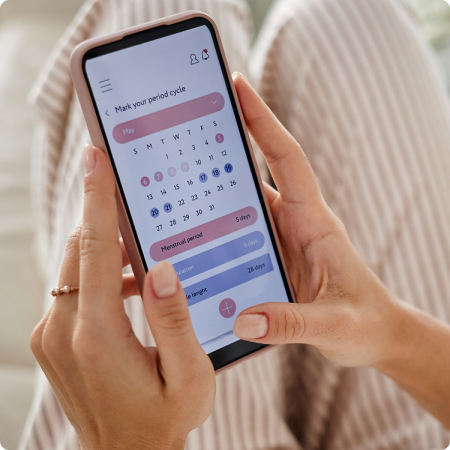
Chelsea: Fertility awareness-based methods, or FABMs, are a group of methods that help people identify their “fertile window”—which are the days during each menstrual cycle when they are most likely to get pregnant if they have unprotected vaginal sex. To identify this window, people track and interpret certain signs their body gives them (such as when their period starts, changes in cervical mucus, basal body temperature or certain hormone levels).
“FemTech” is a broad umbrella term for consumer-centric technologies aimed to improve the health and lives of people with female reproductive organs. Some fertility-tracking FemTech products are essentially digital FABMs. Not all FemTech is related to fertility tracking, and not all FABM users use FemTech to practice their method. Nonetheless, use of FABMs is rising, and digital fertility-tracking FemTech products are entering the sexual and reproductive health landscape at a rapid (and sometimes underregulated) pace.
Guttmacher: You’ve said FABMs have long been understudied. How did that information vacuum create an opening for misinformation?
Chelsea: For decades, many in the reproductive health community have ignored, sidelined or dismissed FABMs. Studies show that many contraceptive providers receive little to no formal training on these methods. If a patient struggles with side effects from hormonal contraception, or is simply interested in FABMs, they may end up feeling dismissed by their provider, which may spur them to turn elsewhere, perhaps to social media. On social media, fear-based messaging about hormonal contraception is rampant, and mis- and disinformation spreads easily from commercially or ideologically-driven voices.
If we don’t work to close that gap with rigorous evidence, high-quality clinical training and clear communication, commercial or political actors will be all too happy to fill it. Their messaging can be based on ulterior motives that prioritize their bottom line or political aspirations, rather than the public’s right to informed choice and reproductive autonomy.
Guttmacher: Some political actors are promoting FABMs while working to restrict other forms of contraception. How are these methods being politicized?
Chelsea: FABMs aren’t inherently political. They’re simply another option for fertility management. There’s nothing political about choosing the method that feels right for you.
What has become political is how FABMs are being weaponized. For example, Project 2025 calls on the CDC to message about the “unsurpassed effectiveness of modern fertility awareness-based methods.” That claim is simply inaccurate. Several other contraceptive methods are more effective at preventing pregnancy than any FABM studied to date. While effectiveness is just one of many factors that shape contraceptive preferences, people deserve clear and accurate information about the relative effectiveness of different options to make an informed decision.
Conservative influencers use language about “wellness” and “empowerment” and “reclaiming your cycle” in talking about FABMs. They’re tapping into something real. Some people do experience side effects from hormonal contraception, and some feel the medical/scientific establishment has dismissed their concerns. The Make America Healthy Again movement weaponizes these concerns to push an agenda restricting access to reproductive health care. They elevate FABMs not as one option among many, but as a replacement for the full spectrum of reproductive care. The underlying message is that you don’t need hormonal contraceptive options, you don’t need abortion access, you don’t need IVF—you just need to track your cycle.
When politicians promote FABMs while actively working to restrict access to comprehensive care and family supports, it’s not about advancing choice, health or empowerment. It’s about control.
Guttmacher: Why are the stakes higher in a post-Dobbs landscape?
Chelsea: If someone chooses a FABM based on inflated and inaccurate claims about its effectiveness, they are put at risk of unintended pregnancy. In states with abortion bans or severe restrictions, an unintended pregnancy can mean being forced to carry to term with little to no recourse. This raises the stakes enormously for anyone making contraceptive decisions and reaffirms the importance of accurate information. Inaccurate claims, whether accidental or deliberate, take the power of informed choice out of people’s hands.
Guttmacher: You established the facts on FABM effectiveness through “oppositional collaboration.” What is that, and what came of it?
Chelsea: Oppositional collaboration means deliberately building a research team that includes people with divergent views on sensitive topics. Our group had a wide spectrum of views on things like contraception and abortion, but our uniting goal was to keep the focus on the data, trying to harness our collective viewpoint diversity to check one another’s biases. We developed a rigorous quality assessment framework that we applied consistently across all studies in our review, regardless of whether the findings were favorable or unfavorable to FABMs.
Oppositional collaboration makes it harder for anyone’s prior assumptions, in either direction, to consciously or unconsciously shape the results, and can increase the chances that a broader swath of people will thoughtfully consider your conclusions.
Shortly after we published our 2018 review, the CDC cited it when updating how the CDC describes FABM effectiveness, moving toward language more deeply grounded in current evidence. That’s the outcome I want from research: public health guidance that follows the data wherever the data leads.
Guttmacher: Our new strategic plan puts science at the heart of countering misinformation. How does bringing that approach to FABMs push back on bad information, whether it’s from a company or a political movement?
Chelsea: Whether a FemTech company makes an inflated effectiveness claim or a political movement cherry-picks a statistic, both are relying on the fact that most people don’t have the time or training to independently evaluate underlying studies, or to assess credible evidence. Guttmacher is brimming with people who do have that training and who are committed to rigorous and honest communication of what real data shows.
Guttmacher: Why do you do this work?
Chelsea: My interest in FABMs is simply an extension of my interest in all contraceptive methods. I really started digging into FABMs specifically when working at USAID in 2011. As a reproductive health epidemiologist, I was troubled by how much confusion surrounded the side effects of hormonal contraception.
Simultaneously, I felt that the SRH field had been falling short on optimal communication on FABMs.
I kept noticing huge disconnects between how researchers and clinicians in my field talked about FABMs and how users talked about them. I spent a lot of time just listening in online groups where women discussed FABMs and their experiences in the health care system, which gave me an appreciation for their perspectives and the clear need for better data and person-centered communication on these issues. Extending Guttmacher’s rigor and person-centered approach into this space isn’t a departure from our core work. It’s an application to one of the fastest-growing, least-scrutinized corners of reproductive health.