
A conversation with Susheela Singh, a key architect of Guttmacher’s global research program, on how the evidence engine she helped build still travels across borders. She retires this fall after four decades at Guttmacher.
Numbers Without Borders
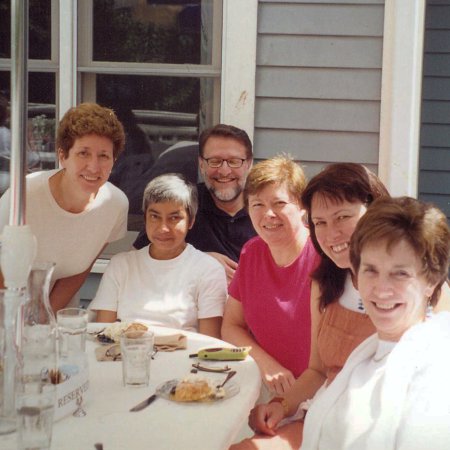
When Susheela Singh joined Guttmacher in 1985, the Institute did not do global research. Today, the organization has active partnerships with organizations in 22 countries and in all major regions around the world, and its global data platforms—Abortion Worldwide and Adding it Up—provide some of the most widely cited and high-impact evidence in the field. Across those four decades, Guttmacher’s global portfolio was built study-by-study together with partners, often in places where the data were scarce and the politics were complicated. Susheela, now scholar emerita, laid much of the intellectual foundation.
We spoke with Susheela about how global sexual and reproductive health and rights research evolved over the span of her career.
Guttmacher: You left Guyana at 18 to study in Canada and later earned your PhD at Berkeley. How did that background shape the way you’ve approached Guttmacher’s global research?
Susheela: Growing up in Guyana, combined with my academic training, had a large influence on the research I’ve done at Guttmacher. Guyana showed me how gender roles can be unequal, how family structure can vary, how some people did not have a choice in who they could marry or how many children they could have, and it also exposed me to positive exceptions to these patterns. Fortunately, my parents encouraged me to pursue university, which led a career focused on sexual and reproductive health research.
Guttmacher: When you joined Guttmacher in 1985, the Institute wasn’t doing global research. How did that work get started, and what was your part in building it?
Susheela: We were a small research team at the time I joined, fewer than 15 people, very different from the nearly 50 research staff members we have now. We didn’t do any research in what were then called “developing countries.”
I was motivated to continue working on these issues, and there was support from our president and Guttmacher to begin research on countries other than the US. Our then-president was able to raise a significant grant to support the first global research project, in three countries in Latin America—Brazil, Colombia and Peru. In the process, I found national data on treatment for post-abortion complications, leading me to develop an indirect methodology to estimate abortion incidence. That approach became the Abortion Incidence Complications Method, or AICM.
Guttmacher: Those early country studies grew into two flagship streams of work. How did Abortion Worldwide and Adding It Up take shape?
Susheela: In 1999 we published the first global estimates on abortion, based on my idea of combining work that one of our researchers had done on safe/legal abortion with estimates that the WHO was producing on unsafe abortions. That work grew into Abortion Worldwide, Guttmacher’s ongoing global estimates of abortion incidence across 150 countries and all regions and subregions. Before this, you could not get country-level data.
Those first global estimates were arithmetic, a simplistic way of combining the data we had. Later, around 2014, Jonathan Bearak joined the staff and figured out a better way to do these estimates statistically, using Bayesian models to build robust, country-specific estimates. These new estimates were published for the first time in 2022, in collaboration with WHO.
In 2003–2004, Guttmacher developed a methodology to estimate the costs and health benefits of providing contraceptive services to meet the need in low- and middle-income countries. I led that effort with essential contributions from other staff and a consultant. That project became Adding It Up.
Guttmacher: Given the increasing rise of the anti-rights movement, can you talk about the importance of the work you helped lead with the Guttmacher–Lancet Commission in 2016? Why did the field need a single, shared definition of sexual and reproductive health and rights?
Susheela: The four essential components of SRHR (sexual health, reproductive health, sexual rights and reproductive rights) are interconnected. Developing its comprehensive definition has given the field a common foundation. Our community uses this to argue for all SRH services as we resist the anti-rights movement.
The anti-rights movement has grown stronger in the past decade, and the comprehensive definition and framework of the Commission remains more relevant than ever for our field and for pushing back against that movement.
Guttmacher: The methodology you co-developed for estimating abortion in countries with restrictive laws has been adopted for use in the United States as abortion bans and restrictions increase. What’s it like to see that work applied here?
Susheela: It has been gratifying to see how Guttmacher researchers working on domestic and international projects have been able to come together to adapt the methodology to states in which abortion is banned or severely restricted. It shows one of our key strengths as a truly global organization. While it’s nice to see the work I helped start living on, I find it deeply unfortunate that the method needs to be used in the US context.
Guttmacher: Guttmacher doesn’t have offices abroad. All in-country work happens through partners. What does an equitable partnership look like to you?
Susheela: It means partnerships where there is mutual trust and respect, work that advances participating partners’ agendas and transparent communication. It also means placing equal value on each partner’s contribution.
Because we do not have offices in other parts of the world, all of our in-country and in-region work is done with partner organizations. Equitable partnership is essential to that model. The African Coalition for Research and Communication on Abortion (ACORCA) has been a model for partnership in that region. Guttmacher was part of the coalition–building process, working with founding partners across the region and ultimately shifting power for our in-country partners to lead.
ACORCA is an example of what the future of global research on SRHR will look like, with power and resources shifting to in-country researchers so that they can set the scientific agenda and deliver evidence that meets the needs of their own context. Looking back over my years at Guttmacher, I am proud to have played a role in getting our program of global research off the ground and in helping transition that program to a new model and a new generation of leaders.