Executive Summary
Access to comprehensive sexual and reproductive health and rights (SRHR)—including modern contraception—saves lives, advances gender equality and supports education, economic participation and sustainable development. Sweden has long been a leading donor in this area, contributing to programs that strengthen health systems and support the health and rights of women, adolescents, LGBTQI+ people and underserved populations worldwide.
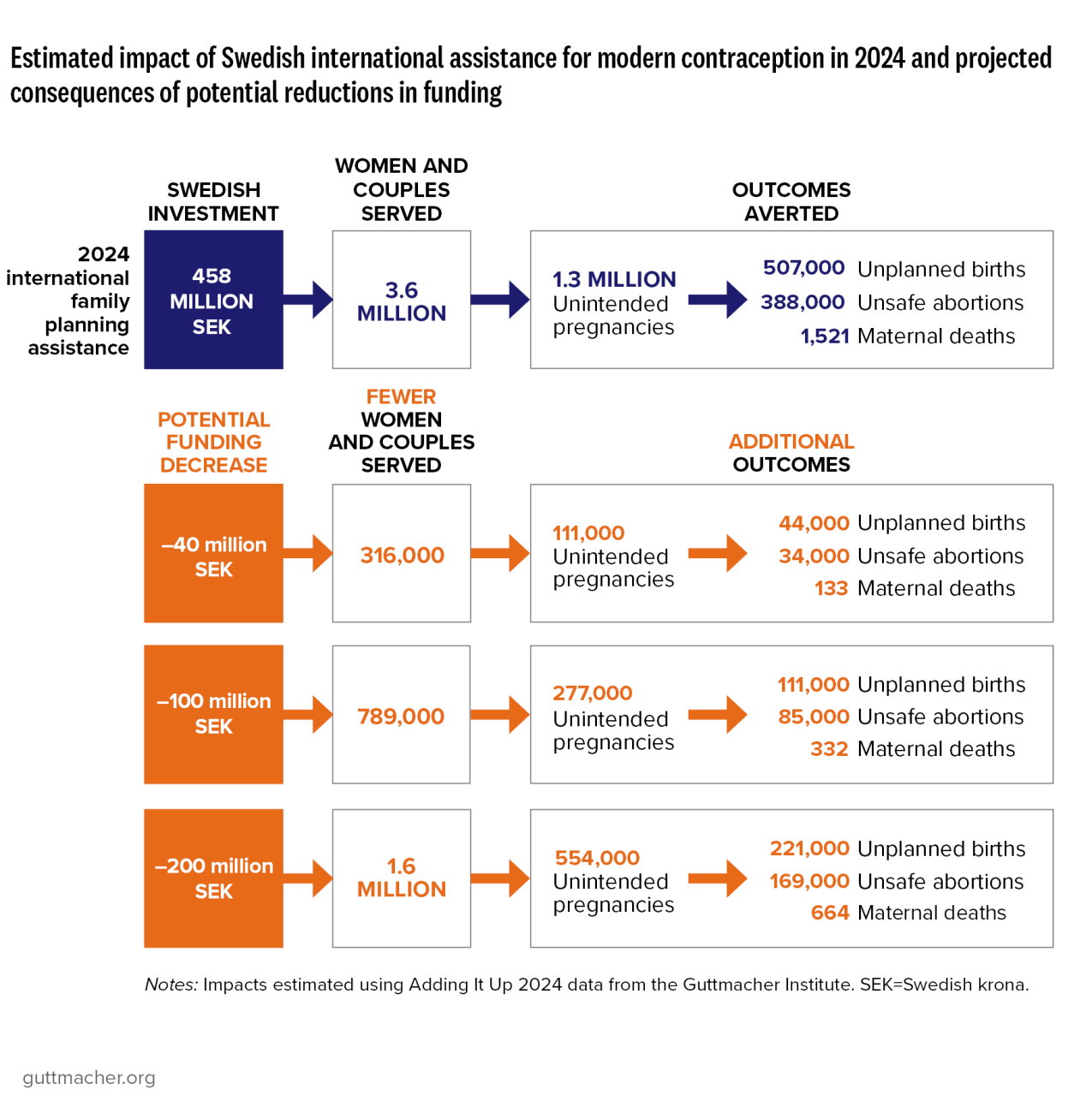
Sweden’s international assistance for modern contraception in 2024 is conservatively estimated at approximately 458 million SEK. This investment enabled an estimated 3.6 million women and couples in low- and middle-income countries to access modern contraceptive services. It also helped avert approximately:
- 1.3 million unintended pregnancies, including
- 507,000 unplanned births
- 388,000 unsafe abortions
- 1,521 maternal deaths
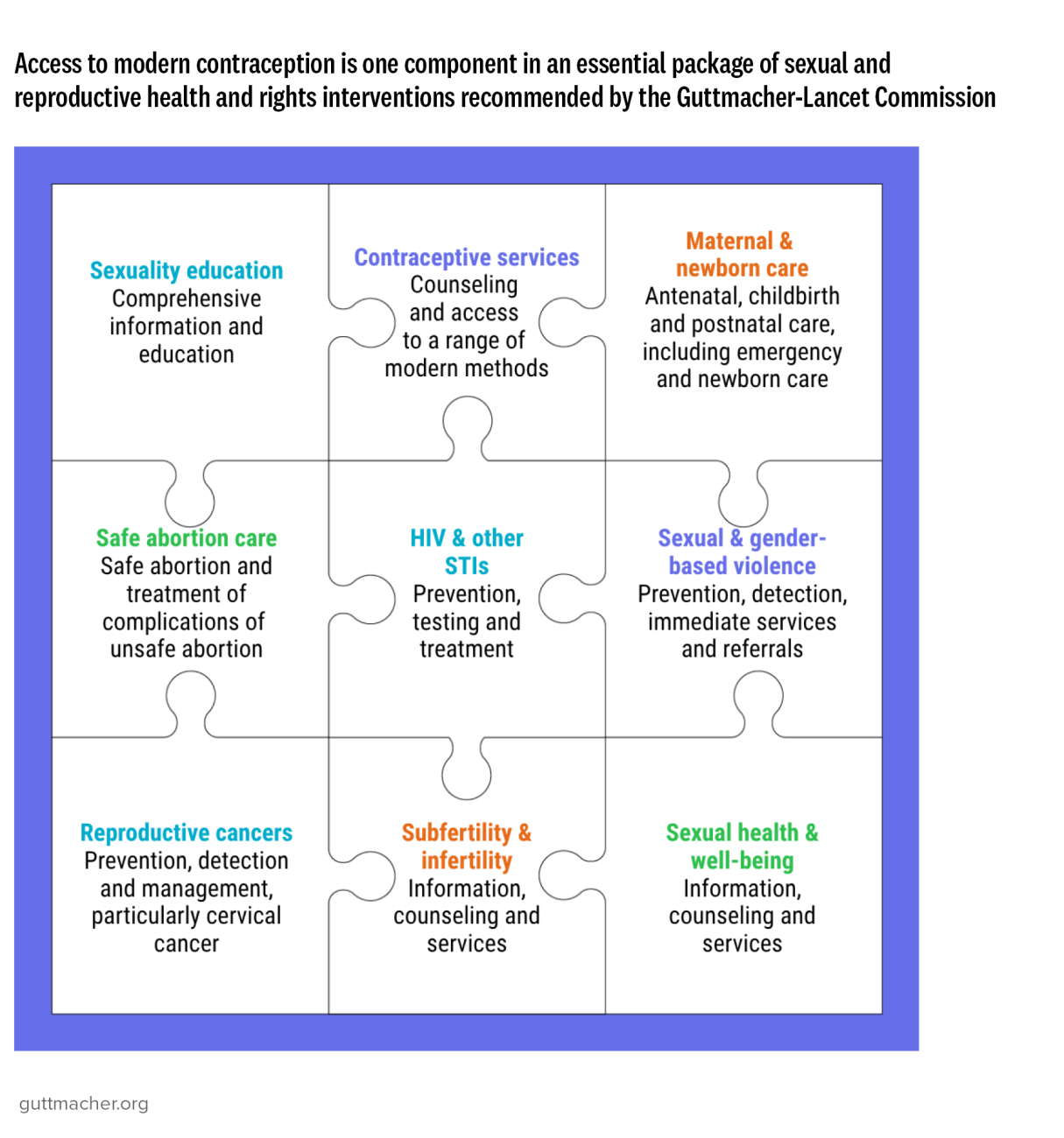
These results represent only one part of Sweden’s broader SRHR contribution. Swedish assistance also supports maternal and newborn health, safe abortion care where legal, HIV and sexually transmitted infection services, comprehensive sexuality education, prevention of and response to gender-based violence, and stronger rights-based health systems.
At a time of declining development assistance, mounting humanitarian and climate-related crises, and growing opposition to SRHR, reductions in Swedish funding would have immediate consequences. A 40 million SEK annual decrease would mean approximately 316,000 fewer women and couples receiving modern contraceptive services. This could result each year in an estimated 111,000 additional unintended pregnancies, 44,000 additional unplanned births, 34,000 additional unsafe abortions and 133 additional maternal deaths. Maintaining Sweden’s investment and international leadership is therefore essential to protecting health and human rights, advancing gender equality and sustaining progress toward the 2030 Agenda for Sustainable Development.1
Methods: Using an established methodology developed by the Guttmacher Institute as part of its Just the Numbers series, we estimated the amount of Sweden’s international development assistance for family planning and its impacts on reproductive health outcomes. Sweden’s 2024 funding for modern contraception was estimated using Organisation for Economic Co-operation and Development (OECD) Development Assistance Committee disbursement data and the revised Muskoka methodology. US dollar values were converted to Swedish krona using Sveriges Riksbank’s 2024 annual average exchange rate.2 Health impacts were modeled by the Guttmacher Institute using 2024 costs per contraceptive user and outcome ratios from the Adding It Up 2024 study3 and the Family Planning Investment Impact Calculator methodology.4 Because integrated programs and flexible funding cannot be fully identified in OECD reporting, the funding and impact estimates are conservative.
Sweden’s Support for SRHR
Access to comprehensive sexual and reproductive health and rights (SRHR), including modern contraceptive services, is essential for improving health outcomes and advancing gender equality. Investments in SRHR contribute to healthier lives while supporting education, economic participation and sustainable development across the life course.5
Sweden has a strong record of investments in SRHR. Through its international development cooperation, it has advanced the health and rights of women; adolescents; lesbian, gay, bisexual, transgender, queer and intersex (LGBTQI+) individuals and other marginalized groups, while strengthening health systems and promoting gender equality. In 2024, Sweden allocated 5.29% of its official development assistance to SRHR.6 In July 2026, Sweden’s government announced an additional 60 million SEK for the United Nations Population Fund (UNFPA)’s Midwifery Accelerator initiative.7 This support is vital amid declining development investment, mounting humanitarian and climate-related crises, and growing opposition to SRHR in some countries. Swedish development cooperation shows that support for SRHR and gender equality is closely linked to socially constructed norms.8 Therefore, sustained funding and advocacy are essential to deliver services, protect rights and enable lasting social change.
Comprehensive SRHR includes a broad package of essential services,5 as shown in the graphic below. This analysis focuses specifically on one component, modern contraceptive services. Sweden’s international assistance for modern contraception in 2024 was estimated at approximately 458 million SEK. In addition, funding is frequently integrated into broader programs and flexible funding modalities that cannot be fully captured using OECD Development Assistance Committee reporting and the revised Muskoka methodology (see Methodology and Sources section).