
Guttmacher Institute

Search

  • X
  • Facebook
  • Instagram
  • Youtube
  • LinkedIn
  • Contact

Highlights

  • Reproductive Health Impact Study
  • Adding It Up
  • Abortion Worldwide
  • Guttmacher-Lancet Commission
  • US policy resources
  • State policy resources
  • International Perspectives on Sexual and Reproductive Health (1975–2020)
  • Perspectives on Sexual and Reproductive Health (1969–2020)

Reports

  • Global
  • United States

Articles

  • Global research
  • US research
  • Policy analysis
  • Guttmacher Policy Review
  • Opinion

Fact Sheets

  • Global
  • United States
  • US State Laws and Policies

Tools

  • Interactive Map: US Abortion Policies and Access After Roe
  • Family Planning Investment Impact Calculator
  • Monthly Abortion Provision Study Dashboard
  • State legislation tracker
  • Public-use data sets

Global

  • Abortion
  • Contraception
  • Pregnancy
  • Teens

US

  • Abortion
  • Contraception
  • Pregnancy
  • Teens

Our Work by Geography

  • Global
  • Africa
  • Asia
  • Europe
  • Latin America & the Caribbean
  • Northern America
  • Oceania

Who We Are

  • About
  • Staff
  • Board
  • Job opportunities
  • Newsletter
  • History
  • Contact
  • Conflict of Interest Policy

Media

  • Media office
  • News releases

Support Our Work

  • Make a gift today
  • Monthly Giving Circle
  • Ways to Give
  • Guttmacher Guardians
  • Guttmacher Legacy Circle
  • Financials
  • Impact Report 2025

Awards & Scholarships

  • Darroch Award
  • Richards Scholarship
  • Bixby Fellowship
Donate
Guttmacher Institute
Donate

Highlights

  • Reproductive Health Impact Study
  • Adding It Up
  • Abortion Worldwide
  • Guttmacher-Lancet Commission
  • US policy resources
  • State policy resources
  • International Perspectives on Sexual and Reproductive Health (1975–2020)
  • Perspectives on Sexual and Reproductive Health (1969–2020)

Reports

  • Global
  • United States

Articles

  • Global research
  • US research
  • Policy analysis
  • Guttmacher Policy Review
  • Opinion

Fact Sheets

  • Global
  • United States
  • US State Laws and Policies

Tools

  • Interactive Map: US Abortion Policies and Access After Roe
  • Family Planning Investment Impact Calculator
  • Monthly Abortion Provision Study Dashboard
  • State legislation tracker
  • Public-use data sets

Global

  • Abortion
  • Contraception
  • Pregnancy
  • Teens

US

  • Abortion
  • Contraception
  • Pregnancy
  • Teens

Our Work by Geography

  • Global
  • Africa
  • Asia
  • Europe
  • Latin America & the Caribbean
  • Northern America
  • Oceania

Who We Are

  • About
  • Staff
  • Board
  • Job opportunities
  • Newsletter
  • History
  • Contact
  • Conflict of Interest Policy

Media

  • Media office
  • News releases

Support Our Work

  • Make a gift today
  • Monthly Giving Circle
  • Ways to Give
  • Guttmacher Guardians
  • Guttmacher Legacy Circle
  • Financials
  • Impact Report 2025

Awards & Scholarships

  • Darroch Award
  • Richards Scholarship
  • Bixby Fellowship
Donate
  • X
  • Facebook
  • Instagram
  • Youtube
  • LinkedIn
  • Contact
Guttmacher 2025 Impact Report

A Changed Landscape: Tracking Shrinking Contraceptive Access in the United States

Demonstrators gather in front of the US Supreme Court as Medina v. Planned Parenthood South Atlantic is heard in April 2025. (Photo by Tom Williams/Getty Images)

Congress is doing this because they want to restrict contraception and ban abortion. We have proof.” Amy Friedrich-Karnik, Guttmacher’s Director of Federal Policy, revisited comments she made at a Senate press conference in June. At the time, federal lawmakers were weighing drastic cuts to Medicaid—the health insurance program that includes coverage of a robust package of contraceptive services—and many grantees of the Title X family planning program had seen their funding withheld. That proof came from a study Guttmacher began in 2016, tracking the impact of the most sweeping disruptions to US contraceptive access in 50 years, including the 2019 Title X “domestic gag rule,” the COVID-19 pandemic and the Dobbs v. Jackson Women’s Health Organization decision overturning federal abortion rights.  

Guttmacher’s Reproductive Health Impact Study (RHIS) zeroed in on four states: Arizona, Iowa, New Jersey and Wisconsin. It was particularly ambitious in scope, tracking patients’ experiences seeking contraceptive and related care over a seven-year period. That long time horizon allowed researchers to understand the impact of state and federal policy changes during the first Trump administration, which included a drastic reduction in the number of clinics receiving funding for services for low-income people.
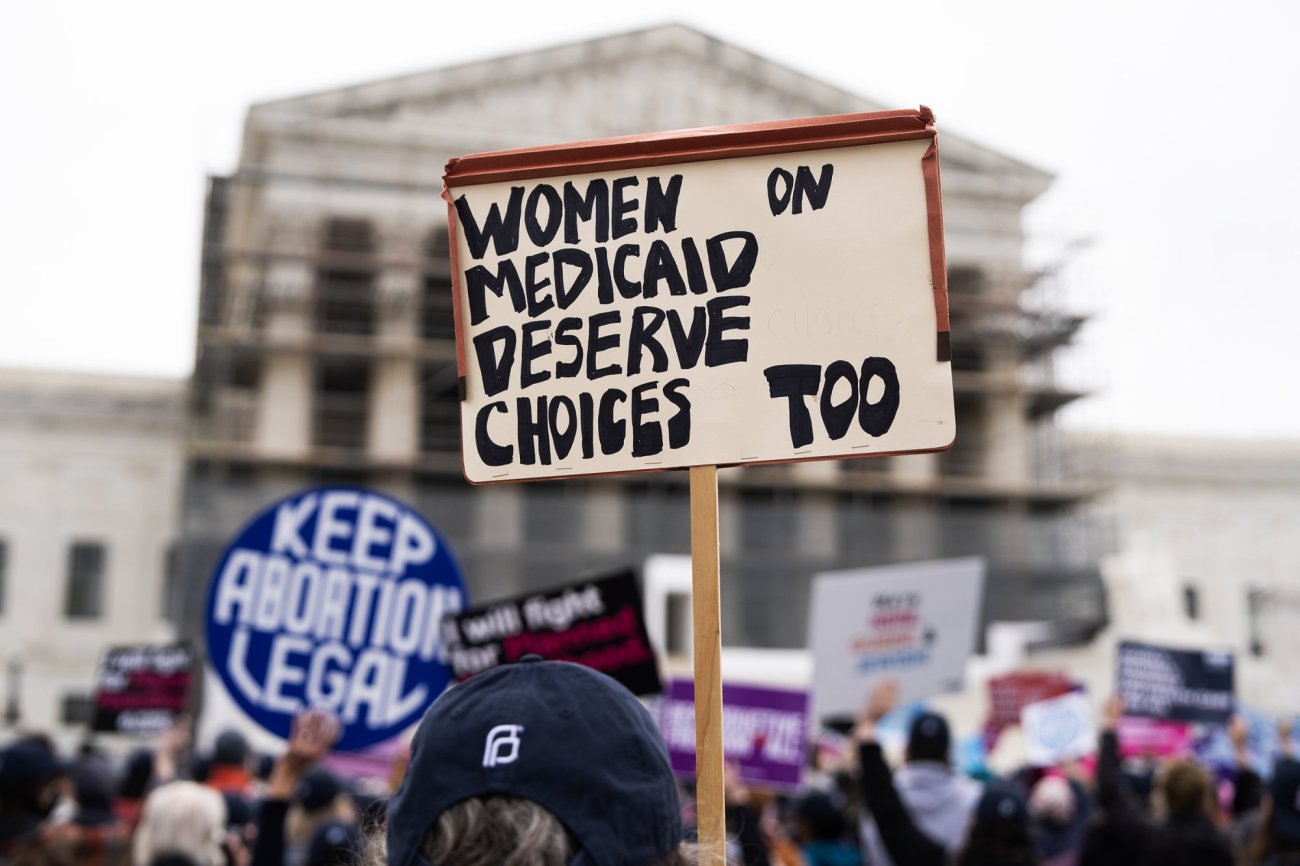
Demonstrators gather in front of the US Supreme Court as Medina v. Planned Parenthood South Atlantic is heard in April 2025. (Photo by Tom Williams/Getty Images)

Demonstrators gather in front of the US Supreme Court as Medina v. Planned Parenthood South Atlantic is heard in April 2025. (Photo by Tom Williams/Getty Images)

“Patients would say, ‘Last time I was here, it was free. Now here I am six months later, and what’s going on? I can’t even use contraception now because I can’t pay for it,’” said Megan Kavanaugh, a principal research scientist at Guttmacher, who led the study. One provider in Iowa quantified the impact, sharing that after losing Title X funding, their clinic went from offering patients a 100% discount on sexual and reproductive health care to just 40%. Kavanaugh’s team found that financial barriers often discouraged patients from seeking contraceptive care at all.  

Restrictive regulations also prevented providers from speaking to patients about the option to have an abortion. One provider in Wisconsin interviewed in the study said, “It's our job to educate women on all of their options, and when it comes to abortion, I feel like I’m swearing when I say it now. It's become a curse word in Wisconsin. […] We have to be very mindful of what we do so we don’t lose funding.”

One of the key takeaways from the study is that policies aimed at restricting one type of sexual and reproductive health care, such as abortion, end up creating barriers to additional types of care. “It’s a ripple effect. These restrictions will always trickle out to other aspects of people’s sexual and reproductive health because that’s the way we live our lives,” said Kavanaugh. “We can’t silo different pieces of health care.”  

Taking to the States

Findings from RHIS are now fueling Guttmacher’s advocacy to preserve sexual and reproductive health funding in the United States. “When the Trump administration abruptly cut off several Title X grantees this spring, we were able to say within a week, ‘This is how many people will be impacted and how,’” said Friedrich-Karnik. Her team developed a toolkit for state-level advocates, breaking down the data that are most relevant and the messaging that is most impactful. One of the goals is to protect funding for clinics, especially those serving low-income populations.

Even in the current context, Friedrich-Karnik sees opportunity in the states. As the study concluded last year, the team took the research to a dynamic mix of stakeholders in each of the states participating in the study, including Department of Health staffers, advocates, health care providers and elected officials. Some of those meetings have led to new coalitions that aim to turn the data into action that increases access to contraceptive care.

“It brought the data alive,” said Friedrich-Karnik. “I've done a lot of coalition work in my career, and I would say that these meetings are some of the most memorable. People were so happy to be in community with each other.”

First published on Guttmacher 2025 Impact Report: October 1, 2025

Share

Guttmacher Institute

Center facts. Shape policy.
Advance sexual and reproductive rights.®

Donate Now
Newsletter Signup  Contact Us 
  • X
  • Facebook
  • Instagram
  • Youtube
  • LinkedIn
  • Contact

Footer

  • Privacy Policy
  • Accessibility Statement
© 2025 Guttmacher Institute. The Guttmacher Institute is registered as a 501(c)(3) nonprofit organization under the tax identification number 13-2890727. Contributions are tax deductible to the fullest extent allowable.