“It was a blatant attempt to try to silence me, merely for speaking truth to try to protect people and their reproductive health,” said Chelsea Polis, reflecting on the $1 million lawsuit filed against her in 2020 that could have destroyed her life and career. After speaking out truthfully against misleading claims made by a medical device company that falsely marketed its fertility thermometer as a highly effective contraceptive method, Polis, a Principal Research Scientist at the Guttmacher Institute, was shocked to learn she was being sued for defamation. The suit was filed despite both a scientific journal and the US Food and Drug Administration having acted on the scientific and regulatory concerns Polis had raised about the product’s claims.
A two-year legal battle followed, and Polis ultimately prevailed. But the risks to scientists who aim to bring evidence-based perspectives to public dialogue are rapidly intensifying in the current climate, while the need to forcefully counter misinformation is growing.
Determining how to advance truthful narratives and policy change rooted in facts is top of mind for Kelly Baden, Vice President for Public Policy, who is leading Guttmacher’s efforts to combat rising misinformation and disinformation on sexual and reproductive health and rights. “Data are necessary but not sufficient to change the world,” said Baden. “Evidence has to be coupled with strong communication and collaborators on the ground to set a narrative about what the research tells us.”
Polis sees research institutions like Guttmacher playing an important role in countering false information. “Our staff have the methodological chops to spot flawed studies, the deep familiarity with the evidence base to know what the best science says and the policy insight to recognize when falsehoods could do real harm on a large scale. We’re committed to making sure the facts matter—even when they’re inconvenient or complex.”
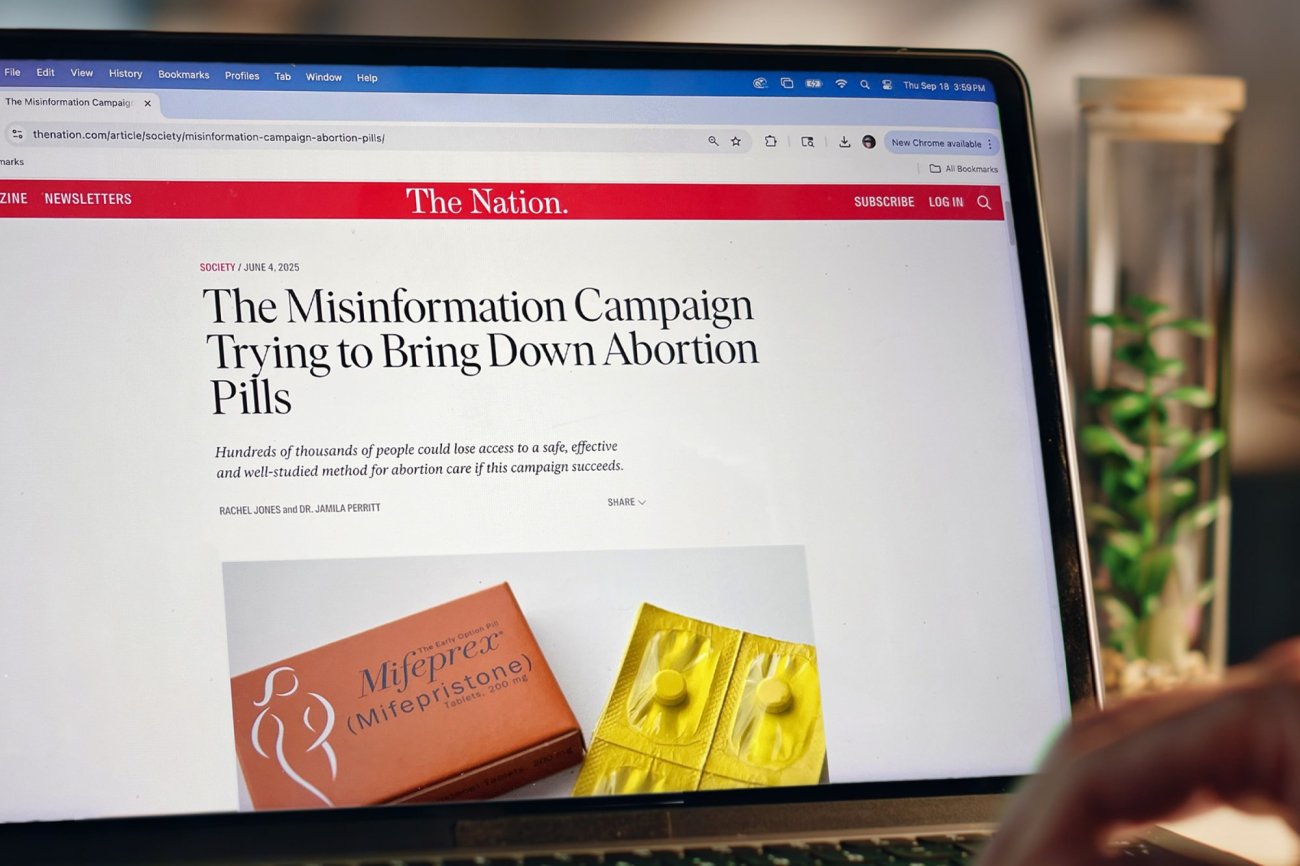
Guttmacher put that philosophy into practice this May, when a conservative anti-abortion organization released a paper attempting to counter long-standing evidence on the safety of mifepristone, the first pill in the most commonly used regimen for medication abortion in the United States. Baden’s research colleagues analyzed the claims line by line, pointing out conflicts with existing scientific evidence. Guttmacher policy experts were able to equip key partners and offices on Capitol Hill with this analysis, preparing them for the legal and regulatory attacks on mifepristone from Trump administration appointees. Guttmacher’s Principal Research Scientist Rachel K. Jones and Dr. Jamila Perritt of Physicians for Reproductive Health then penned an op-ed, drawing attention to the flawed study and its goals of leveraging unsound science to restrict access to abortion care.