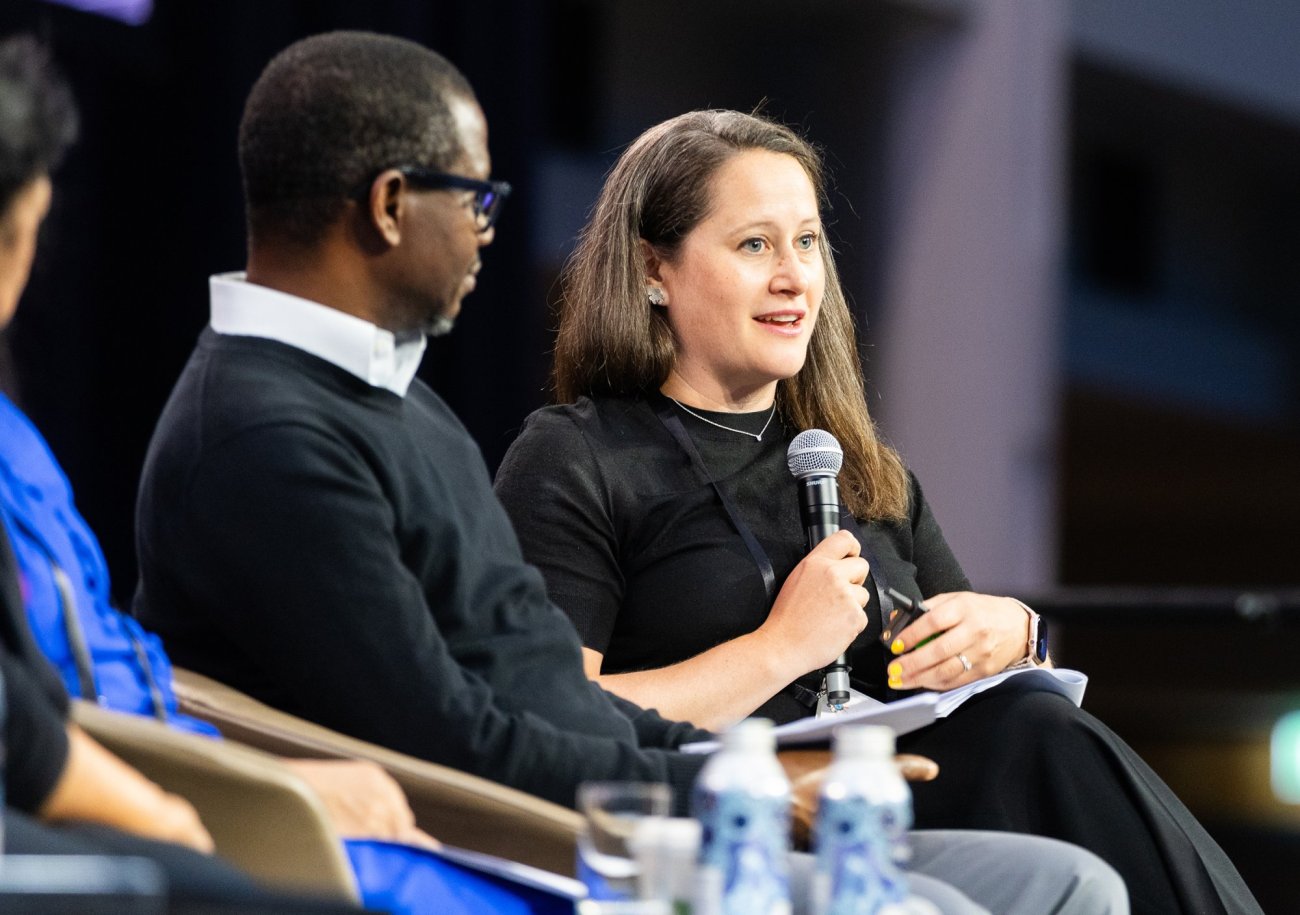
“There has been so much chaos and confusion. It’s hard for anyone to stay on top of what is happening day-to-day,” said Beth Sully, Guttmacher’s Director of International Research, as she reflected on the Trump administration’s historic transformation of the global funding landscape for family planning and sexual health. As partners, governments and providers catch up to the new normal, Guttmacher’s team of international researchers has stepped in as a much-needed source of trusted, actionable data.
“We’ve spent years investing in and building really strong global models that allowed us to be really responsive in this moment,” said Sully. “And, our whole international model is working in partnerships. People in-country are the experts on their own local contexts, and we feed evidence into that.” That unique combination—strong data systems and trusted relationships with global partners—has positioned Guttmacher as a key engine behind the global race to preserve sexual and reproductive health and rights (SRHR) funding.
The numbers are stark. As of July 2025, Guttmacher estimates that more than 70% of all international funding for family planning is at risk, including 40% from the United States alone. That’s where Sully and her team of international research scientists come in. Since January, they have fielded dozens of requests from government leaders and advocates around the world to provide credible evidence that makes the case for maintaining funding for programs related to SRHR.
Already, there are wins to celebrate. Last fall, Guttmacher partnered with Dutch government leaders to produce “Just the Numbers: The Impact of Dutch International Assistance for Family Planning and HIV.” Released on the same day as the launch of an interparliamentary working group on SRHR, the report outlined that the Dutch investment in sexual and reproductive health resulted in 8.5 million people accessing contraceptive care each year, saving nearly 3,000 lives in low- and middle-income countries annually.
The data were used by members of two opposing political parties who jointly penned an op-ed making the case for preserving the Netherlands’ SRHR funding. “There are still cuts coming, but they aren’t what they would have been,” said Sully. “We made sure the value of investing in SRHR was clear and that those programs are still a priority on the agenda.”
Over the long term, Sully and her team hope to reduce reliance on government partners like the United States and European Union countries. Still, that shift will take time. “Everyone is pretty heartbroken right now. ‘How are you’ is a hard question to ask—there have been layoffs of 30 to 50% of staff at some of the key partners in the field, and we are watching the services and programs that are so critical to the lives of people around the world fall apart. No one is okay,” said Sully. “But we’re in it to fight. We’ve got grit.”