
Sexual and reproductive health and rights (SRHR), including family planning programs and services, are central to resilient health systems, gender equality and sustainable development.1 The evidence is unequivocal: Investments in SRHR save lives, reduce maternal mortality, prevent unintended pregnancies, and expand educational and economic opportunities for women, girls and LGBTQIA+ people.
Canada’s Support for SRHR
Over the past decade, Canada has firmly established a strategic and respected leadership role in advancing SRHR globally. The 2020 launch of the 10-Year Commitment to Global Health and Rights, with an annual target of CA$700 million for SRHR, solidified Canada's position as a credible and principled global leader and has delivered measurable, positive outcomes for millions of people.2 By explicitly prioritizing comprehensive, rights-based SRHR, including a focus on neglected areas, Canada helped set a global standard that affirms SRHR as foundational to the realization of broader human rights and global health.
The 10-Year Commitment also set a global precedent for effective SRHR financing: predictable, multi-year, ring-fenced investments as the bedrock of resilient and sustainable health systems. This evidence-based approach reflects the exceptionally high returns of SRHR investments, which remain among the most cost-effective and high-impact development interventions available.3–5
Between 2019 and 2023, Canada invested approximately CA$2.09 billion in SRHR.6 With SRHR investments accounting for 5.04% of official development assistance in 2023, Canada consistently ranks among the leading donors globally for SRHR.7 As other donors retreat from funding SRHR, Canada’s sustained investments ensure predictability and stability for essential services. Canada is among a group of major economies—including leading European donors, Japan, Australia and South Korea—that account for the majority of global SRHR financing. Yet, the global financing gap for meeting the SRHR needs of women in low- and middle-income countries still stands at US$54 billion, a gap that will only widen if Canada steps back from its commitments.3
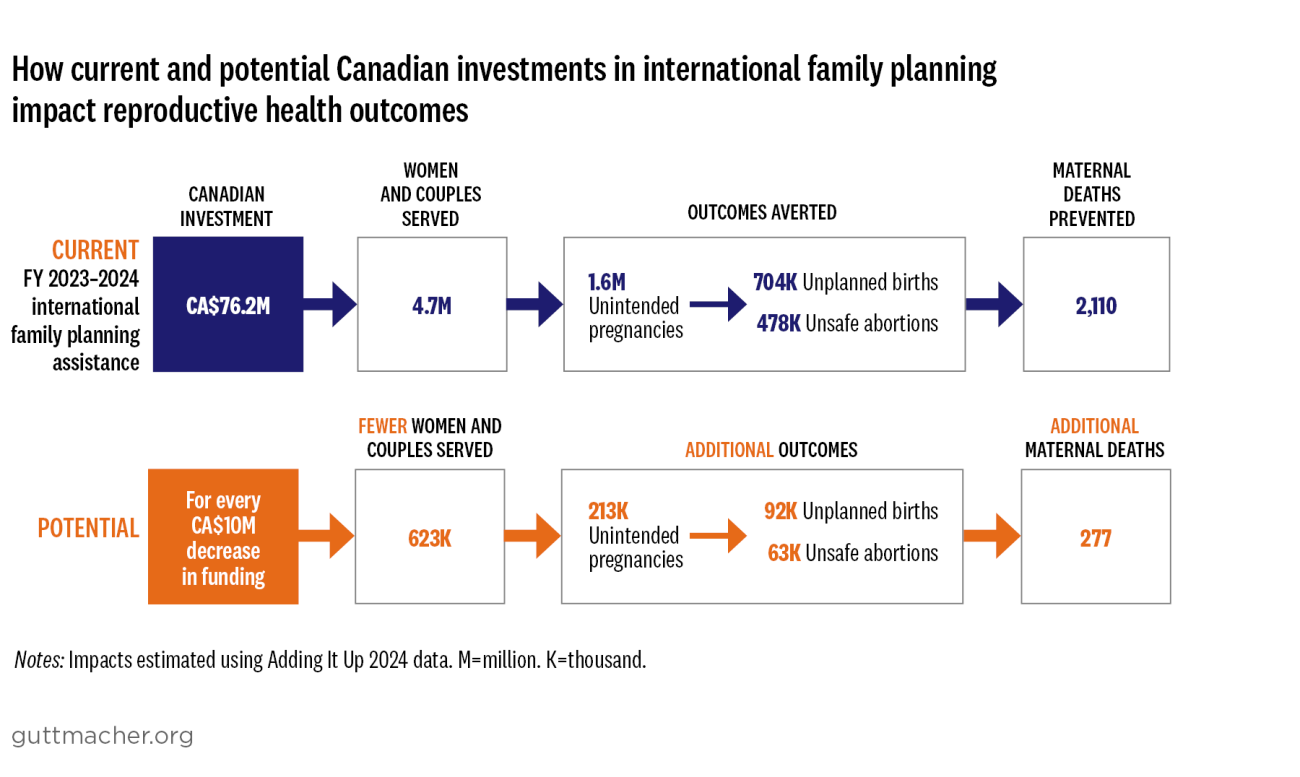
Planned reductions of CA$2.7 billion in the development assistance budget over the next four years, alongside the 2025 federal budget’s specific targeting of global health funding for cuts, put Canada’s leadership at risk.8 The impacts of these reductions are not abstract. They will be felt by adolescents denied access to contraception and by mothers who have nowhere to give birth safely and with dignity. In this moment of global retrenchment, Canada’s financial and political investment in SRHR plays a critical stabilizing role and must be protected.