The Adding It Up study examines the need for, impact of and cost of fully investing in sexual and reproductive health (SRH) care—services that ensure people can decide whether and when to have children, experience safe pregnancy and delivery, have healthy newborns, and have a safe and satisfying sexual life.
Access to comprehensive sexual and reproductive health services is recognized as a fundamental human right, essential for achieving gender equality and enabling individuals to make autonomous decisions about their own bodies, health and futures. Realizing this right for all women, especially those facing systemic barriers, upholds human dignity and advances equity across communities.
WHO IS AFFECTED: Women of reproductive age (15–49) in 23 low- and middle-income countries (LMICs) in Latin America and the Caribbean in 2024
WHAT IT COVERS: Contraceptive services, maternal care, newborn care, abortion services and treatment for the major curable STIs
WHAT’S NEW IN 2024: The latest edition of Adding It Up offers a more person-centered approach to contraceptive need than previous studies by providing estimates of women who would like to avoid a pregnancy, are not currently using a contraceptive method, and intend to use contraception in the future or are open to future use. This definition, called “unmet demand,” offers the most strategic starting point for prioritizing limited resources, and focuses on women’s own expressed preferences for contraceptive use.
All cost estimates and savings are calculated in 2024 US dollars.
Current Use of Contraception and Pregnancy Outcomes in Latin America and the Caribbean
Contraceptive use
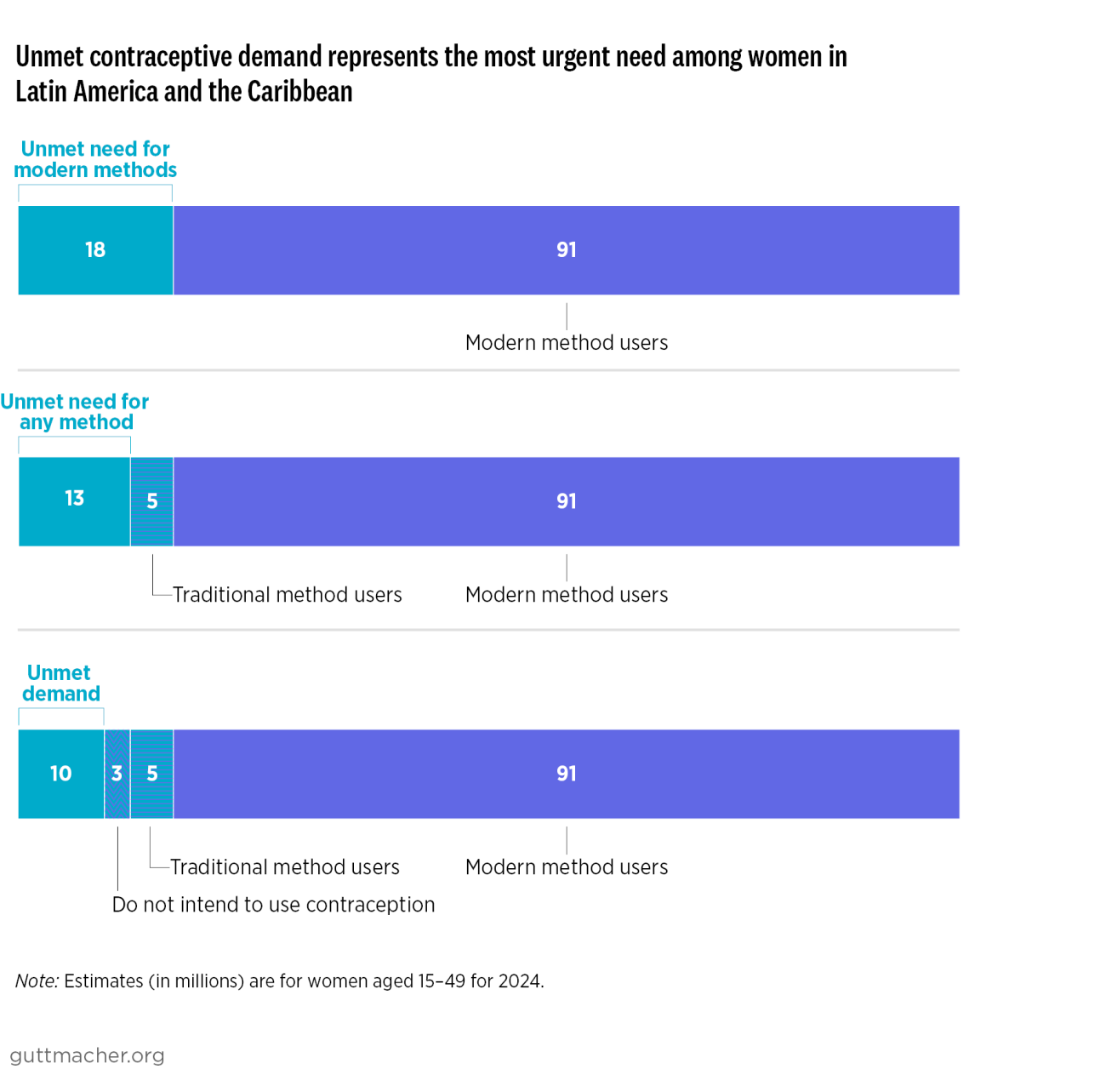
In LMICs in Latin America and the Caribbean, 109 million women of reproductive age want to avoid a pregnancy. Out of this total, 91 million women are using modern contraception and five million rely on traditional methods.
The types of modern contraceptive methods currently used range widely:
- 56% of modern method users rely on short-acting methods
- 11% on long-acting reversible methods
- 33% on sterilization
Approximately 10 million women have an unmet demand for contraception, meaning they want to avoid pregnancy and have expressed interest in using modern contraception, but are not currently doing so.