• Nearly half of pregnancies among American women in 2011 were unintended, and about four in 10 of these were terminated by abortion.[1]

• Twenty-one percent of all pregnancies (excluding miscarriages) in 2011 ended in abortion.[2]

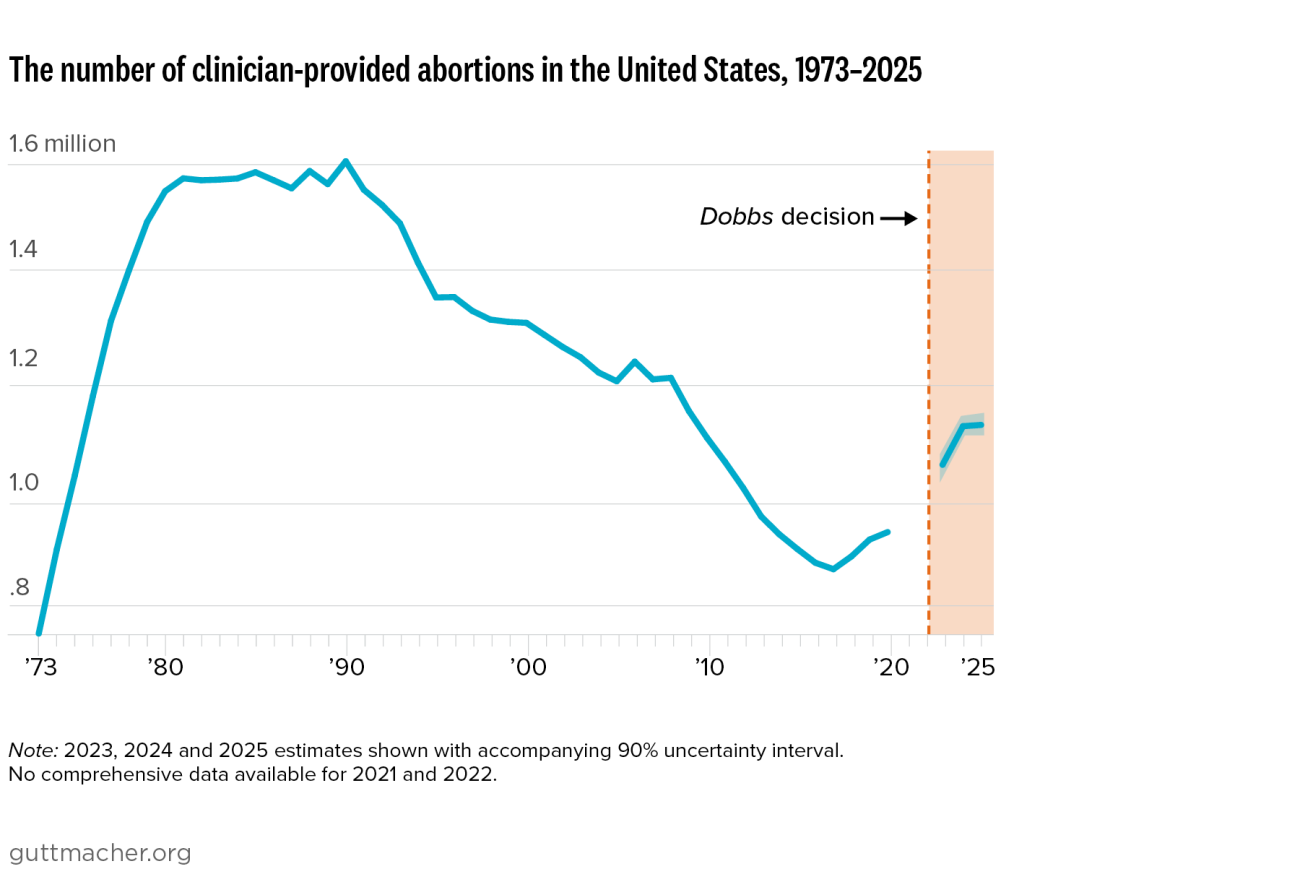
• In 2011, approximately 1.06 million abortions were performed, down 13% from 1.21 million in 2008. From 1973 through 2011, nearly 53 million legal abortions occurred.[2]

• The abortion rate in 2011 was 16.9 per 1,000 women aged 15–44, down 13% from 19.4 per 1,000 in 2008. This is the lowest rate observed since abortion became legal in the United States in 1973.[2]

• In 2011, 1.7% of women aged 15–44 had an abortion [2]. Half of these women had had at least one previous abortion.[3]

• At 2008 abortion rates, almost one in 10 women will have an abortion by age 20, one in four by age 30 and three in 10 by age 45.[4]

WHO HAS ABORTIONS?

• Twelve percent of U.S. abortion patients in 2014 were teenagers: Those aged 18–19 accounted for 8% of all abortions, 15–17-year-olds for 3% and teenagers younger than 15 for 0.2%.[3]

• More than half of all abortion patients in 2014 were in their 20s: Patients aged 20–24 obtained 34% of all abortions, and patients aged 25–29 obtained 27%.[3]

• White patients accounted for 39% of abortion procedures in 2014, blacks for 28%, Hispanics for 25% and patients of other races and ethnicities for 9%.[3]

• Seventeen percent of abortion patients in 2014 identified as mainline Protestant, 13% as evangelical Protestant and 24% as Catholic; 38% reported no religious affiliation.[3]

• In 2014, some 46% of all abortion patients had never married and were not cohabiting.[3]

• Fifty-nine percent of abortions in 2014 were obtained by patients who had had at least one previous birth.[3]

• Forty-nine percent of abortion patients in 2014 had incomes of less than 100% of the federal poverty level ($11,670 for a single adult with no children).*,[3]

• Twenty-six percent of abortion patients in 2014 had incomes of 100–199% of the federal poverty level.[3]

• The reasons patients gave for having an abortion underscored their understanding of the responsibilities of parenthood and family life. The three most common reasons—each cited by three-fourths of patients—were concern for or responsibility to other individuals; the inability to afford a child; and the belief that having a baby would interfere with work, school or the ability to care for dependents. Half said they did not want to be a single parent or were having problems with their husband or partner.[5]

• Fifty-one percent of abortion patients had used a contraceptive method in the month they got pregnant, most commonly condoms (27%) or a hormonal method (17%).[6]

PROVIDERS AND SERVICES

• The number of U.S. abortion providers declined 4% between 2008 and 2011 (from 1,793 to 1,720). The number of clinics providing abortion services declined 1% over this period (from 851 to 839). Eighty-nine percent of all U.S. counties lacked an abortion clinic in 2011, and 38% of women of reproductive age lived in those counties.[2]

• Forty-six percent of abortion providers offer very early abortions (before the first missed period), and 95% offer abortion at eight weeks from the last menstrual period. Sixty-one percent of providers offer at least some second-trimester abortion services (at 13 weeks or later), and 34% offer abortion at 20 weeks. Only 16% of all abortion providers perform the procedure at 24 weeks.[7]

• In 2011–2012, the average amount paid for a nonhospital abortion with local anesthesia at 10 weeks’ gestation was $480. The average paid for an early medication abortion before 10 weeks was $504.[7]

• Eighty-four percent of clinics reported at least one form of antiabortion harassment in 2011. Picketing was the most common form of harassment (80%), followed by phone calls (47%). Fifty-three percent of clinics were picketed 20 times or more in a year.[7]

EARLY MEDICATION ABORTION

• In September 2000, the U.S. Food and Drug Administration approved mifepristone to be marketed in the United States as an alternative to surgical abortion.

• In March 2016, the Food and Drug Administration updated the mifepristone label to reflect the scientifically proven regimen that was already being used by most health care providers. The new regimen allows patients to take lower doses and make fewer provider visits, and also allows for medication abortion up to 10 weeks’ gestation.

• In 2011, some 59% of abortion providers—1,023 facilities—provided one or more early medication abortions. At least 17% of providers offered only early medication abortion services.[2]

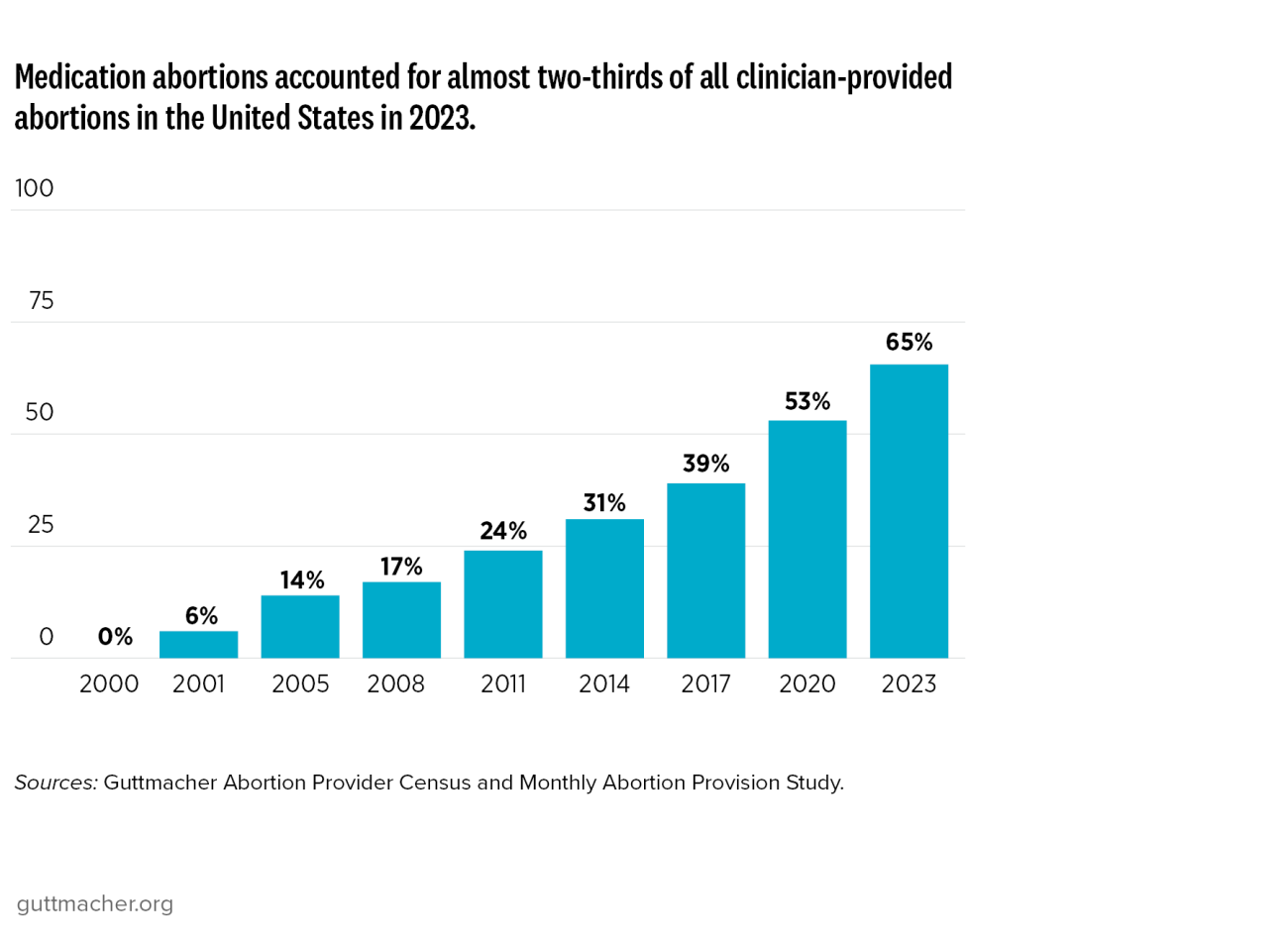
• Medication abortion accounted for 23% of all nonhospital abortions in 2011, and for 36% of abortions before nine weeks’ gestation.[2]

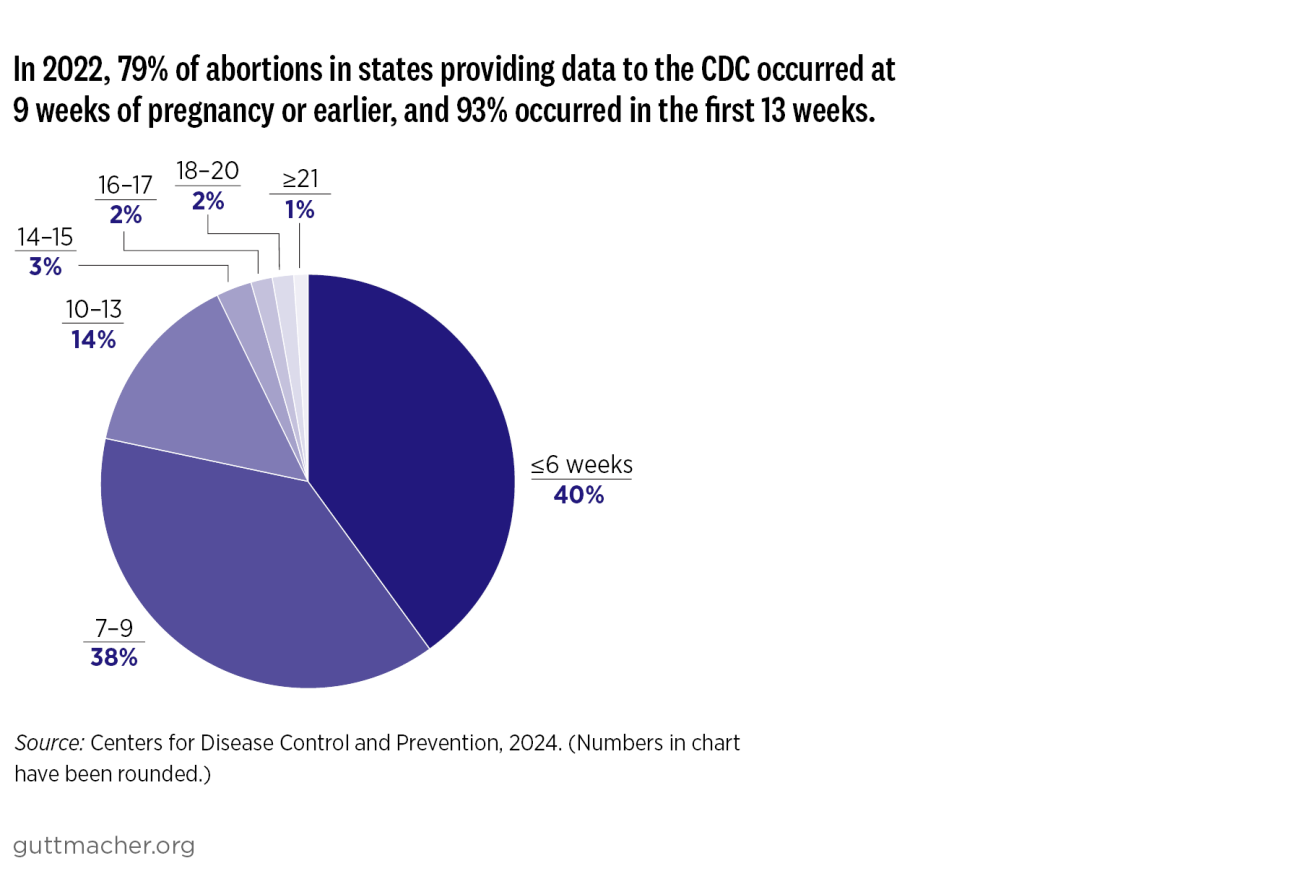
• Early medication abortions increased from 6% of all abortions in 2001 to 23% in 2011, even while the overall number of abortions continued to decline. Data from the Centers for Disease Control and Prevention show that the average time of abortion has shifted earlier within the first trimester; this is likely due, in part, to the availability of medication abortion services.[8]

SAFETY OF ABORTION

• A first-trimester abortion is one of the safest medical procedures and carries minimal risk—less than 0.05%—of major complications that might need hospital care.[9]

• Abortions performed in the first trimester pose virtually no long-term risk of problems such as infertility, ectopic pregnancy, spontaneous abortion (miscarriage) or birth defect, and little or no risk of preterm or low-birth-weight deliveries.[10]

• Exhaustive reviews by panels convened by the U.S. and UK governments have concluded that there is no association between abortion and breast cancer. There is also no indication that abortion is a risk factor for other cancers.[10]

• Leading experts have concluded that among women who have an unplanned pregnancy, the risk of mental health problems is no greater if they have a single first-trimester abortion than if they carry the pregnancy to term.[11]

• The risk of death associated with abortion increases with the length of pregnancy, from 0.3 for every 100,000 abortions at or before eight weeks to 6.7 per 100,000 at 18 weeks or later.[12]

INSURANCE COVERAGE AND PAYMENT

• Most abortion patients had health insurance in 2014. Thirty-five percent reported that they had Medicaid coverage, while 31% had private insurance.[3] However, insurance does not necessarily cover abortion services, and even if it does, patients may not use their coverage for a variety of reasons (e.g., because they do not know their plan covers it, they are concerned about confidentiality or their provider does not accept their plan).[13]

• Overall, 53% of abortion patients paid out of pocket for their procedure in 2014.[3

• Medicaid was the second-most-common method of payment, reported by 24% of abortion patients. The overwhelming majority of these patients live in the few states that allow state funds to be used to pay for abortion.[3]

• Fifteen percent of patients used private insurance to pay for the procedure. Most patients with private insurance (61%) paid out of pocket.[3]

• In 2004, 58% of abortion patients said they would have liked to have had their abortion earlier in the pregnancy. Nearly 60% of women who experienced a delay in obtaining an abortion cited the time it took to make arrangements and raise money. [14]

LAW AND POLICY

• In the 1973 Roe v. Wade decision, the Supreme Court ruled that women, in consultation with their physician, have a constitutionally protected right to have an abortion in the early stages of pregnancy—that is, before viability—free from government interference.

• In 1992, the Court reaffirmed the right to abortion in Planned Parenthood v. Casey. However, the ruling significantly weakened the legal protections previously afforded women and physicians by giving states the right to enact restrictions that do not create an “undue burden” for women seeking abortion.

• Congress has barred the use of federal Medicaid funds to pay for abortions, except when the woman’s life would be endangered or in cases of rape or incest. States can fund abortion with state dollars, and about one-third of states do so voluntarily or by court order.

• As of April 1, 2016, at least half of the states have imposed excessive and unnecessary regulations on abortion clinics, mandated counseling designed to dissuade a woman from obtaining an abortion, required a waiting period before an abortion, required parental involvement before a minor obtains an abortion or prohibited the use of state Medicaid funds to pay for medically necessary abortions.[15, 16, 17, 18]

• In 2000, a total of 13 states had at least four types of major abortion restrictions and so were considered hostile to abortion rights;[19] by 2015, this category included 27 states.[20] The proportion of women of reproductive age living in hostile states rose from 31% to 56% during this time period.

• In contrast, the number of states that were supportive of abortion rights fell from 17 to 12 between 2000 and 2015. The proportion of women of reproductive age living in supportive states declined from 40% to 30% over this period.[20]