
Guttmacher Institute

Search

  • Facebook
  • Instagram
  • Youtube
  • LinkedIn
  • Contact

Highlights

  • Reproductive Health Impact Study
  • Adding It Up
  • Abortion Worldwide
  • Guttmacher-Lancet Commission
  • US policy resources
  • State policy resources
  • International Perspectives on Sexual and Reproductive Health (1975–2020)
  • Perspectives on Sexual and Reproductive Health (1969–2020)

Reports

  • Global
  • United States

Articles

  • Global research
  • US research
  • Policy analysis
  • Guttmacher Policy Review
  • Opinion

Fact Sheets

  • Global
  • United States
  • US State Laws and Policies

Tools

  • Interactive Map: US Abortion Policies and Access After Roe
  • Family Planning Investment Impact Calculator
  • Monthly Abortion Provision Study Dashboard
  • Public-use data sets

Global

  • Abortion
  • Contraception
  • Pregnancy
  • Teens

US

  • Abortion
  • Contraception
  • Pregnancy
  • Teens

Our Work by Geography

  • Global
  • Africa
  • Asia
  • Europe
  • Latin America & the Caribbean
  • Northern America
  • Oceania

Who We Are

  • About
  • Staff
  • Board
  • Job opportunities
  • Newsletter
  • History
  • Contact
  • Conflict of Interest Policy

Media

  • Media office
  • News releases

Support Our Work

  • Make a gift today
  • Monthly Giving Circle
  • Ways to Give
  • Guttmacher Guardians
  • Guttmacher Legacy Circle
  • Financials
  • Impact Report 2025

Awards & Scholarships

  • Darroch Award
  • Richards Scholarship
  • Bixby Fellowship
Donate
Guttmacher Institute
Donate

Highlights

  • Reproductive Health Impact Study
  • Adding It Up
  • Abortion Worldwide
  • Guttmacher-Lancet Commission
  • US policy resources
  • State policy resources
  • International Perspectives on Sexual and Reproductive Health (1975–2020)
  • Perspectives on Sexual and Reproductive Health (1969–2020)

Reports

  • Global
  • United States

Articles

  • Global research
  • US research
  • Policy analysis
  • Guttmacher Policy Review
  • Opinion

Fact Sheets

  • Global
  • United States
  • US State Laws and Policies

Tools

  • Interactive Map: US Abortion Policies and Access After Roe
  • Family Planning Investment Impact Calculator
  • Monthly Abortion Provision Study Dashboard
  • Public-use data sets

Global

  • Abortion
  • Contraception
  • Pregnancy
  • Teens

US

  • Abortion
  • Contraception
  • Pregnancy
  • Teens

Our Work by Geography

  • Global
  • Africa
  • Asia
  • Europe
  • Latin America & the Caribbean
  • Northern America
  • Oceania

Who We Are

  • About
  • Staff
  • Board
  • Job opportunities
  • Newsletter
  • History
  • Contact
  • Conflict of Interest Policy

Media

  • Media office
  • News releases

Support Our Work

  • Make a gift today
  • Monthly Giving Circle
  • Ways to Give
  • Guttmacher Guardians
  • Guttmacher Legacy Circle
  • Financials
  • Impact Report 2025

Awards & Scholarships

  • Darroch Award
  • Richards Scholarship
  • Bixby Fellowship
Donate
  • Facebook
  • Instagram
  • Youtube
  • LinkedIn
  • Contact
Report
April 2026

Attacks on Gender-Affirming Care & Abortion: The Same Tactics Used to Ban Life-Saving Care

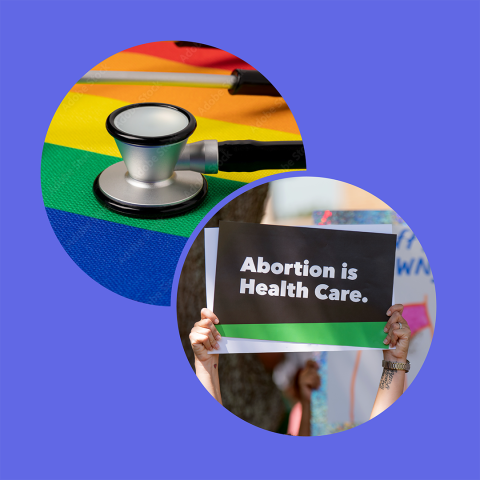
A purple background with two intertwined images: One of a gavel on a pride flag and the other of an "Abortion is Health Care" protest sign.

Author(s)

Kimya Forouzan and Meera Rajput

Reproductive rights are under attack. Will you help us fight back with facts?

Donate

Historically, anti-abortion and anti-LGBTQ advocates have fostered an increasingly hostile environment for diminishing meaningful access to essential health care. It is crucial to honor and ground this fight in champions who have paved the way and fearlessly advocated for rights to accessing care such as California’s Barbara Lee, who worked tirelessly to repeal the Hyde Amendment for abortion access. In the past few years, however, there has been a dramatic increase in attacks against two widely used, best-practice medically necessary forms of health care: abortion and gender affirming care. These attacks fall hardest on communities who already face systemic challenges when receiving health care and building towards economic security including Black, Indigenous and other people of color, women, LGBTQ+ individuals, immigrants, disabled people, and young people.

These attacks also come from the same lawmakers and organizations using the same harmful strategies and legislative bills to undermine access. Typically, the playbook of strategic attacks on both abortion and gender affirming care are rooted in undermining people’s bodily autonomy and their ability to make decisions about their own bodies and health care. However, the lesser known and understood connection between the attacks on both are rooted in both “parental rights” and state surveillance and criminalization of accessing each type of health care. This paper will explore the overlapping connection of these two realms when analyzing restrictions on both abortion and gender affirming care and how these strategies have fueled a growing surge of attacks on both forms of health care.

Read the full report here.

Meera Rajput serves as the State Policy Analyst/Counsel at the National LGBTQ Taskforce.

Share

Download Report

Read More

Opinion

Attacks on abortion and gender-affirming care are inextricably linked

The Advocate
Resource

Interactive Map: US Abortion Policies and Access After Roe

Initiative

Monthly Abortion Provision Study

Topic

Adolescent Access to Sexual and Reproductive Health Care in the United States

Topic

United States

  • Abortion
  • Adolescent Access to Sexual and Reproductive Health Care in the United States

Geography

  • Northern America: United States
Guttmacher Institute

Center facts. Shape policy.
Advance sexual and reproductive rights.®

Donate Now
Newsletter Signup  Contact Us 
  • Facebook
  • Instagram
  • Youtube
  • LinkedIn
  • Contact

Footer

  • Privacy Policy
  • Accessibility Statement
© 2026 Guttmacher Institute. The Guttmacher Institute is registered as a 501(c)(3) nonprofit organization under the tax identification number 13-2890727. Contributions are tax deductible to the fullest extent allowable.