
Travel across state lines remains a major avenue of access to abortion care in the United States. In 2025, more than 140,000 people traveled outside of their state of residence to obtain abortion care, with two-thirds (98,000) traveling from states with total, six-, or twelve-week bans.* At the same time, major state policy changes and the growth of access to telehealth services have had a potentially large impact on flows of travel for abortion care across the country.
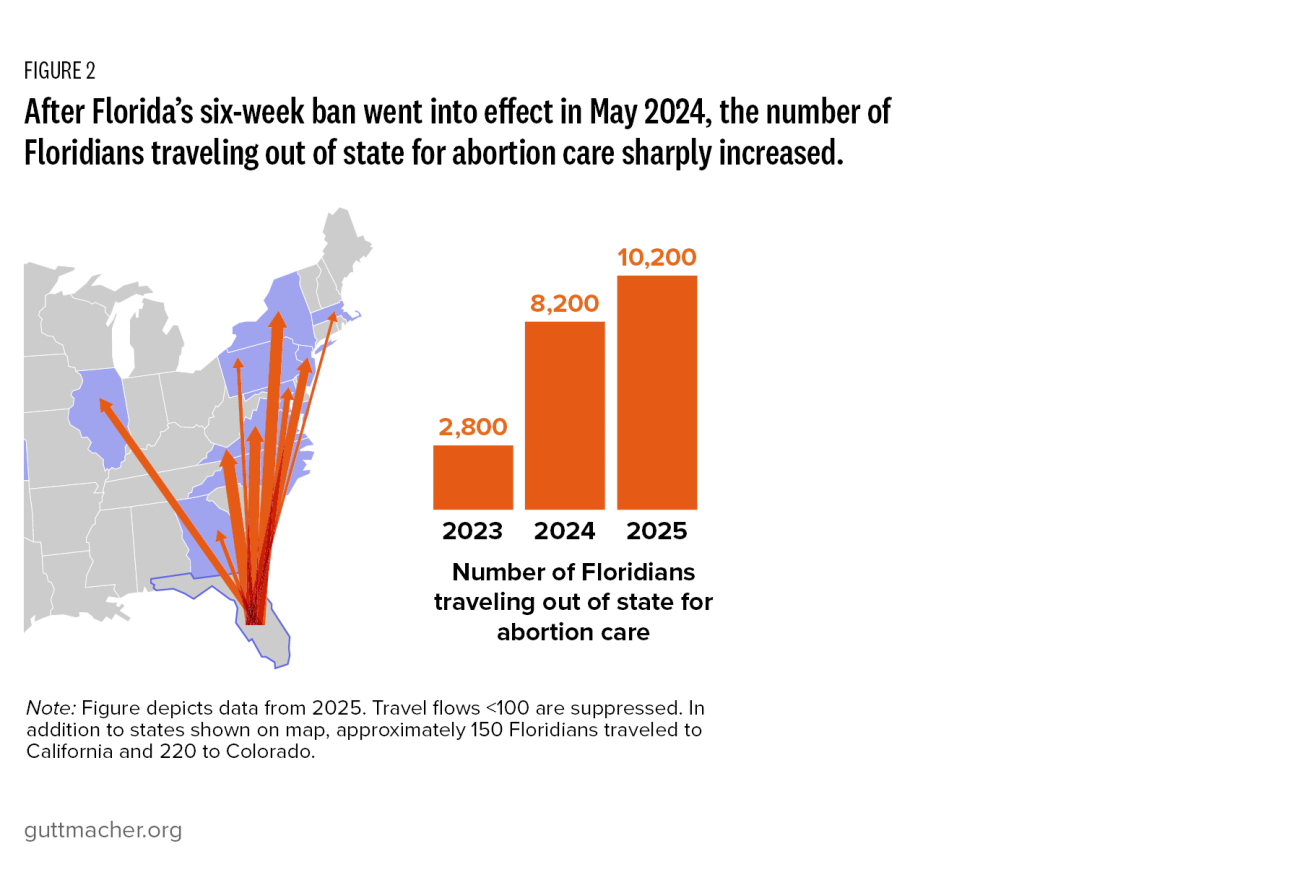
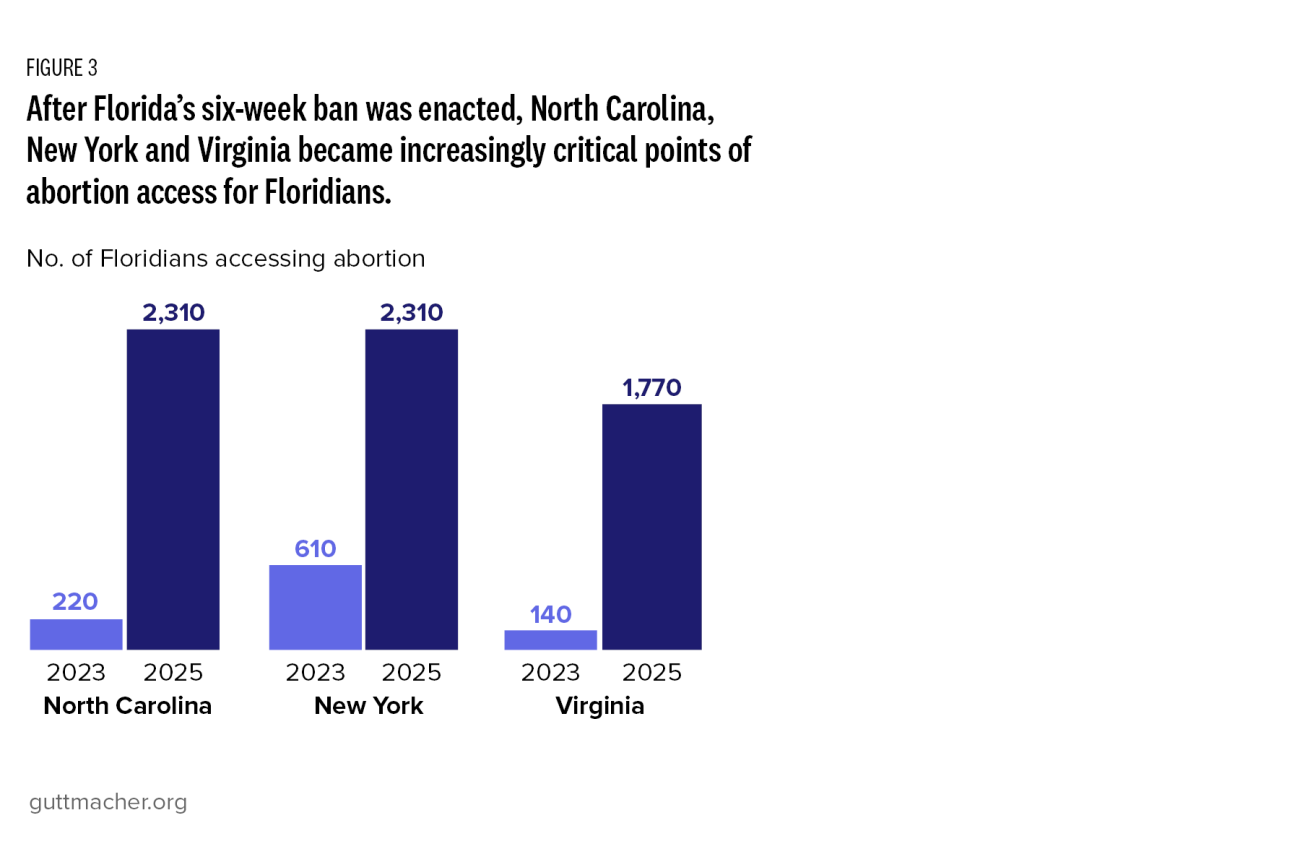
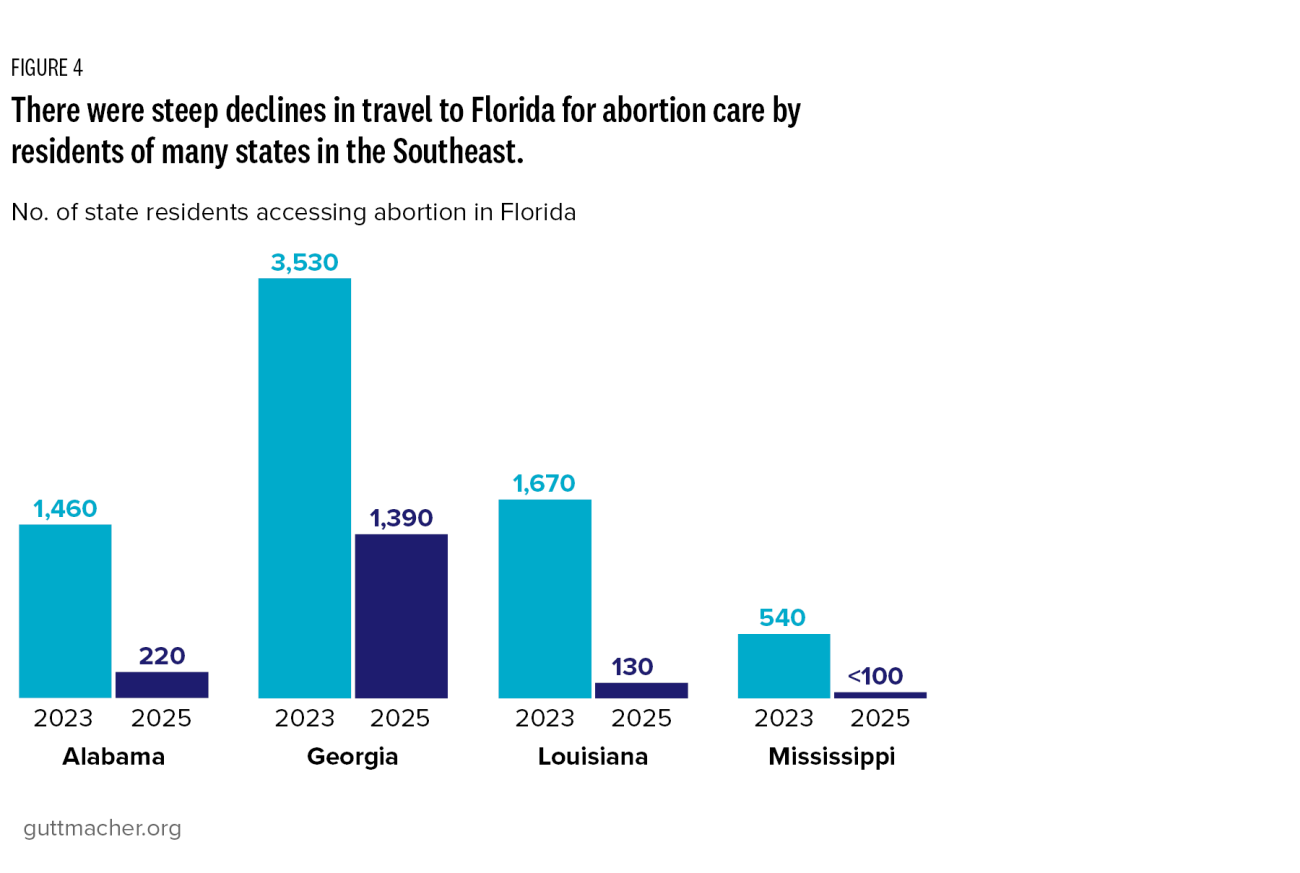
This report presents detailed new data from Guttmacher’s Monthly Abortion Provision Study on travel between states for abortion care in 2025 and explores shifts over the past three years in how people are accessing care and where they obtain it. In particular, it focuses on two states—Texas and Florida—as case studies emblematic of the way increases in telehealth provision and new state bans continue to reshape travel in the South and Southeast.
Despite Increases in Telehealth Access, Many Texans Continue to Travel Substantial Distances to Access Care
Like many other states with total bans on abortion provision or severe restrictions, Texas has seen a major increase in abortion care accessed via telehealth from shield law providers. (Shield laws offer legal protections for clinicians to prescribe and mail abortion pills directly to patients in states with total abortion bans or telehealth restrictions.) In 2025, approximately 42,000 Texans accessed telehealth abortion care under the protection of shield laws, a substantial increase from the 12,400 who did so in 2023. Telehealth plays a particularly critical role in Texas because accessing in-person care can be exceptionally difficult for Texas residents: the provision of abortion care is completely banned in the state, with limited exceptions, and three of the four states bordering Texas (Arkansas, Louisiana and Oklahoma) also have total abortion bans in place. Because of Texas’s size, even the closest clinics in New Mexico (where abortion access is protected) are hundreds of miles away for the millions of people living in Central, Southern and Eastern Texas.
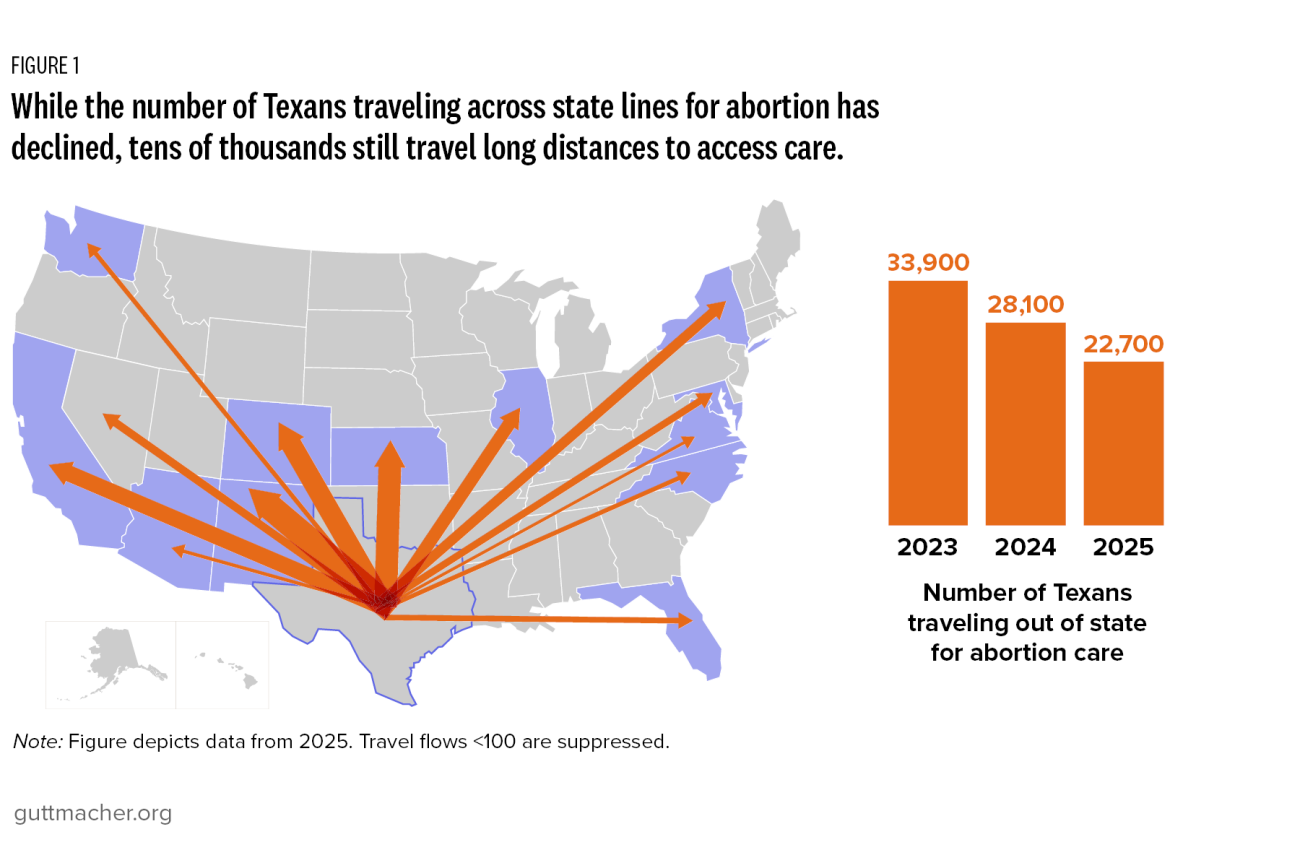
As telehealth provision in Texas increased from 2023 to 2025, the number of Texans travelling for care outside of the state dropped by more than 10,000 (see Figure 1). Although this was the largest decrease seen in any state, the pattern of increased telehealth and decreased travel was mirrored across every single Southern state with a total ban on abortion provision in effect in 2025.